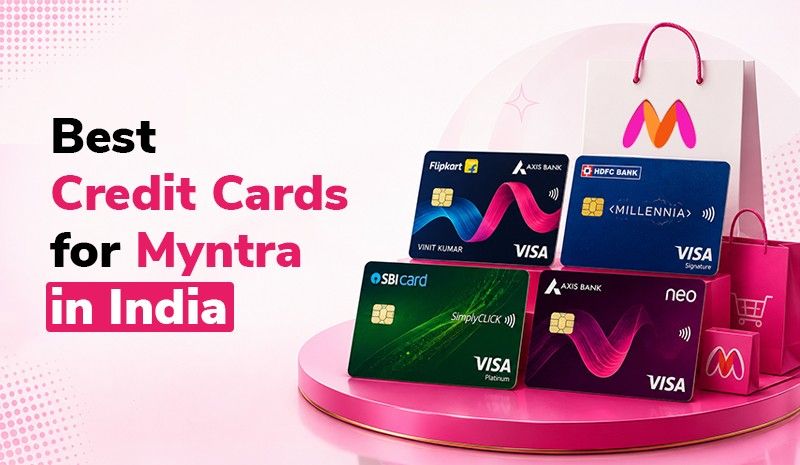

The short answer: it depends on where your money goes every month. The Cashback SBI Card gives 5% on all online spends. The Amazon Pay ICICI Card gives 5% on Amazon (for Prime members) with no annual fee. The HSBC Live+ gives 10% on dining and groceries. The Swiggy HDFC Card gives 10% on Swiggy orders.
No single card wins across every spending category. The “maximum cashback” card for you is the one that matches your heaviest monthly spend. This guide breaks down the top cashback credit cards in India by real-world utility, not headline rates, so you can pick the right one (or two) for your wallet. For a broader overview of our ranked picks, check out our guide to the best cashback credit cards in India.
Credit Cards with Maximum Cashback in India (Quick Comparison)
Here’s how top cashback credit cards in India compare on the numbers that matter.
| Card | Best For | Top Rate | Monthly Cap | Annual Fee | Lifetime Free? |
| Cashback SBI | Online shopping (all merchants) | 5% online | ₹2,000 (online) | ₹999 + GST | No (waived on ₹2L) |
| Amazon Pay ICICI | Amazon shoppers | 5% (Prime) | No cap on Amazon | Nil | Yes |
| Swiggy HDFC | Food delivery, quick commerce | 10% Swiggy | ₹1,500 | ₹500 | No (waived on ₹2L) |
| HSBC Live+ | Dining, groceries | 10% dining/groceries | ₹1,000 | ₹999 + GST | No (waived on ₹2L) |
| Axis Bank ACE | Utility bills (Android only) | 5% via Google Pay | ₹500 (combined) | ₹499 | No (waived on ₹2L) |
| Flipkart Axis Bank | Flipkart, Myntra shoppers | 7.5% Myntra | ₹4,000/quarter | ₹500 | No (waived on ₹3.5L) |
| Airtel Axis Bank | Airtel bill payments | 25% (dynamic cap) | Tied to base spend | ₹500 | No (waived on ₹2L) |
| IDFC FIRST Hello | First-time users (FD-backed) | 5% online (above ₹10K) | ₹1,500 (all categories) | ₹1,000 + GST | No (waived on ₹2L) |
Each card is covered in detail below, including the fine print that headline numbers leave out.
How Cashback Credit Cards Work
Before comparing cards, understand how Indian banks structure cashback. It matters more than you think.
Most cashback cards in India work on a tiered model. You earn an accelerated rate (3% to 10%) on specific categories or partner merchants, and a base rate (1% to 1.5%) on everything else. The accelerated rate almost always comes with a monthly or quarterly cap.
Cashback caps matter because they determine how much you can realistically earn, regardless of the headline cashback percentage.
A card advertising 10% cashback with a cap of ₹1,000 per month means your maximum saving from that category is ₹12,000 a year, regardless of how much you spend. If you’re already hitting that limit halfway through the month, any additional spending usually earns only the base cashback rate.
Another factor to consider is EMI spending. Most cashback credit cards do not offer cashback on EMI transactions, including no-cost EMI purchases. If a significant portion of your spending is made through EMIs, a cashback card may not deliver the value you’re expecting. In that case, a card designed around EMI benefits, merchant offers, or financing perks could be a better fit. Check out our guide to the best no-cost EMI credit cards for more options.
Two more things to watch. First, cashback exclusions. Most Indian cards exclude fuel, rent, wallet loads, insurance, jewellery, educational payments, and government transactions from cashback entirely. These are often your largest monthly outflows. Second, the difference between true cashback (credited as a statement adjustment) and “cashback” paid as reward points or partner wallet balance. The Amazon Pay ICICI Card, for instance, credits your earnings to your Amazon Pay balance, not as a statement credit. That is not a problem if you shop on Amazon regularly, but it is not the same as money back on your bill.
Top Cashback Credit Cards in India
1. Cashback SBI Card: Best for Broad Online Spending
Joining Fee: ₹999 + GST | Annual Fee: ₹999 + GST (waived on ₹2 lakh annual spend)
The Cashback SBI Card has been the default recommendation for online cashback in India for years. The core proposition is 5% cashback on online spends across virtually every merchant, with no brand restrictions. Buy from Amazon, Flipkart, a niche boutique website, or a random SaaS subscription; all qualify for 5%.
But here is what changed. Effective 1 April 2026, SBI revised the cashback caps. The new structure:
- 5% cashback on online spends, capped at ₹2,000 per statement cycle
- 1% cashback on offline (POS) transactions, capped at ₹2,000 per statement cycle
- Overall maximum cashback: ₹4,000 per statement cycle
Previously, the online cashback cap was higher. The April 2026 revision also added digital gaming platforms, tolls, and government-related transactions to the exclusion list, on top of existing exclusions for utility, insurance, fuel, rent, wallet loads, school/educational services, jewellery, and railways.
The cashback is credited automatically as CashPoints (1 CashPoint = ₹1) within two days of your statement generation. No manual redemption needed.
Who should get it: Anyone spending ₹20,000+ per month online across multiple platforms. The lack of merchant restrictions makes it genuinely versatile. At ₹40,000 per month in online spends, you hit the ₹2,000 online cap. That is ₹24,000 per year in cashback, minus the ₹999 fee (easily waived).
The honest catch: The April 2026 cap reduction stings if you were previously earning more. The ₹999 annual fee is not waived automatically; you need ₹2 lakh in annual spend. For someone spending under ₹15,000 online per month, a lifetime-free card like the Amazon Pay ICICI might deliver better net value after accounting for fees.
2. Amazon Pay ICICI Credit Card: Best Lifetime-Free Cashback Card
Joining Fee: Nil | Annual Fee: Nil (lifetime free)
The Amazon Pay ICICI Credit Card is the most popular co-branded card in India for a reason. Zero fees, ever. The cashback structure:
- 5% cashback on Amazon purchases (for Prime members)
- 3% cashback on Amazon purchases (for non-Prime members)
- 2% cashback on Amazon Pay partner merchants (100+ partners)
- 1% cashback on all other spends
- 1% fuel surcharge waiver on transactions between ₹500 and ₹3,000
The 5% rate for Prime members has no monthly cap, as per the card’s current terms. If you spend ₹50,000 per month on Amazon, you earn ₹2,500 back every month. Over a year, that is ₹30,000 in savings with zero annual fee.
Who should get it: Heavy Amazon shoppers, particularly Prime members. Also a strong secondary card for anyone, since the 1% base rate on a lifetime-free card is essentially free money.
The honest catch: Cashback is credited to your Amazon Pay balance, not your card account. You can use Amazon Pay at 100+ partner merchants and for bill payments, but if you want a statement credit, this is not your card. If you do not have Prime (₹1,499/year), the rate drops to 3%, which is still good but not class-leading. For a deeper breakdown of reward tiers, exclusion categories, and whether Prime is worth holding purely for card value, read our Amazon Pay ICICI Credit Card review.
3. Swiggy HDFC Bank Credit Card: Best for Food and Quick Commerce
Joining Fee: ₹500 | Annual Fee: ₹500 (waived on ₹2 lakh annual spend)
The Swiggy HDFC Bank Credit Card was launched in 2023 and has since expanded into a three-card portfolio. The original card remains the strongest all-round option. Post the April 2026 revision, the updated structure:
- 10% cashback on Swiggy (food delivery, Instamart, Dineout, Genie), minimum transaction ₹249, capped at ₹1,500 per month
- 5% cashback on select online categories (Amazon, Flipkart, Myntra, Nykaa, Ajio, Cleartrip, BookMyShow, and others), capped at ₹1,500 per month
- 1% cashback on all other spends, capped at ₹500 per month
- Complimentary 3-month Swiggy One membership on card activation
Maximum total cashback: ₹3,500 per month, or ₹42,000 per year.
HDFC also launched two new variants in March 2026. The Swiggy BLCK HDFC Card carries a higher annual fee (₹1,499) but adds complimentary golf access and slightly different merchant eligibility. The Swiggy Ornge HDFC Card is a lighter variant at ₹499 that caps Swiggy cashback at 5% instead of 10%. Existing Swiggy HDFC cardholders were not migrated to the new variants.
Who should get it: Families or individuals who order food 3+ times a week, use Instamart for groceries, and spend on Dineout regularly. If your Swiggy spend alone is ₹5,000/month, you are looking at ₹500 back just from that category. Add online shopping and the 5% kicks in.
The honest catch: The minimum transaction of ₹249 for the 10% rate means small Instamart orders (milk, bread, single items) may not qualify. The cashback on “select online categories” is not universal; check the eligible MCC list on HDFC’s website before assuming your favourite store qualifies. The ₹500 cap on the 1% base rate limits offline utility. For the full comparison between the original Swiggy HDFC, BLCK, and Ornge variants, see our Swiggy HDFC Credit Card review.
4. HSBC Live+ Credit Card: Best for Dining and Groceries
Joining Fee: ₹999 + GST | Annual Fee: ₹999 + GST (waived on ₹2 lakh annual spend)
The HSBC Live+ Credit Card (formerly the HSBC Cashback Credit Card) is one of the cleanest cashback cards in India. No reward points, no portal, no transfer partners. Spend, get a percentage back as a statement credit.
- 10% cashback on dining, food delivery, and groceries, capped at ₹1,000 per billing cycle
- 1.5% unlimited cashback on all other eligible retail spends
- 4 complimentary domestic airport lounge visits per year (1 per quarter)
- ₹1,000 cashback on downloading the HSBC India app and spending ₹20,000 within 30 days
- ₹250 Amazon eGift Voucher on online application with video KYC (valid till October 2026)
The 10% categories include Swiggy, Zomato, Blinkit, BigBasket, dining at restaurants, and grocery stores. The 1.5% base rate on everything else is uncapped, which is one of the highest unlimited base rates among Indian cashback cards at this fee level.
Who should get it: Urban professionals or families who spend heavily on dining out, food delivery, and grocery purchases. If your combined dining and grocery spend exceeds ₹10,000/month, you hit the ₹1,000 cap. The 1.5% base rate adds meaningful value on top.
The honest catch: HSBC’s geographic eligibility is limited. You must be a resident of select cities: Chennai, Gurgaon, Delhi NCR, Pune, Noida, Hyderabad, Mumbai, Bangalore, Kochi, Coimbatore, Jaipur, Chandigarh, Ahmedabad, or Kolkata. Minimum income requirement is ₹6,00,000 per annum. The exclusion list is long: utility payments, EMIs, e-wallets, fuel, rent, insurance, education, government transactions, jewellery, tolls, and financial institution payments are all excluded from cashback. If these categories form the bulk of your monthly spend, the effective return drops sharply.
5. Axis Bank ACE Credit Card: Best for Utility Bill Payments
Joining Fee: ₹499 | Annual Fee: ₹499 (waived on ₹2 lakh annual spend)
The Axis Bank ACE Credit Card fills a gap that most cashback cards ignore entirely: utility bills. The structure:
- 5% cashback on utility bill payments (electricity, gas, internet) and mobile/DTH recharges via Google Pay
- 4% cashback on Swiggy, Zomato, and Ola
- 1.5% cashback on all other spends (uncapped)
- Combined cap of ₹500 per statement cycle on the 5% and 4% categories
- 4 complimentary domestic airport lounge visits (unlocked on ₹50,000 spend in prior 3 months)
Cashback is automatically credited to your card account. No manual redemption or conversion needed.
Who should get it: Anyone who pays electricity, gas, and internet bills totalling ₹5,000+ per month through Google Pay. Also useful if you order from Swiggy or Zomato regularly but do not want a full Swiggy HDFC commitment.
The honest catch: The ₹500 combined cap on accelerated categories is a hard ceiling. Once you earn ₹500 from the 5% and 4% categories combined in a statement cycle, everything else falls to 1.5%. For someone spending ₹3,000 on bills and ₹3,000 on food delivery, the cap kicks in before the month is over. Critically, the Google Pay bill payment feature that unlocks the 5% rate is only available on Android. iPhone users cannot access this benefit. This is the single biggest limitation of the card, and it is rarely highlighted.
6. Flipkart Axis Bank Credit Card: Best for Flipkart and Myntra Shoppers
Joining Fee: ₹500 | Annual Fee: ₹500 (waived on ₹3.5 lakh annual spend)
The Flipkart Axis Bank Credit Card targets the Flipkart ecosystem directly:
- 7.5% cashback on Myntra
- 5% cashback on Flipkart
- 5% cashback on Cleartrip
- 4% cashback on preferred merchants (Uber, PVR, Swiggy, cult.fit, and others)
- 1.5% cashback on all other spends
- Quarterly cap of ₹4,000 per platform (Flipkart, Myntra, Cleartrip each capped separately)
Cashback is credited as a direct statement credit. No points conversion needed.
Who should get it: Heavy Flipkart and Myntra shoppers. The 7.5% on Myntra is genuinely competitive for fashion and lifestyle purchases. The quarterly cap of ₹4,000 per platform means you can earn up to ₹53,333 worth of Myntra cashback per quarter before hitting the ceiling.
The honest catch: The annual fee waiver threshold is ₹3.5 lakh, significantly higher than most cards in this segment. If your annual card spend is below that, you are paying ₹500/year. Utility bills, fuel, wallet loads, insurance, jewellery, and education are excluded from cashback entirely. The ₹250 welcome voucher (post-June 2025) barely covers the joining fee, unlike the earlier ₹500 voucher. Lounge access was discontinued in the June 2025 revision. We covered the full impact of the June 2025 changes, including the Myntra upgrade and lounge removal, in our Flipkart Axis Bank Credit Card review.
7. Airtel Axis Bank Credit Card: High Headline Rate, Complex Fine Print
Joining Fee: ₹500 | Annual Fee: ₹500 (waived on ₹2 lakh annual spend)
The Airtel Axis Bank Credit Card technically carries the highest cashback percentage among Indian credit cards: 25% on Airtel mobile, broadband, and DTH payments. But the April 2026 devaluation changed how that number actually works.
Before April 2026, the 25% and 10% categories had simple fixed caps of ₹250 per month each. The new structure, effective 12 April 2026:
- 25% cashback on Airtel telecom payments: capped at 2x the base cashback (1% category) earned in the same billing cycle
- 10% cashback on Zomato, Blinkit, and District Movies: capped at 1x the base cashback earned, maximum ₹200 per partner per month, minimum order ₹499
- 1% base cashback on all other spends
This dynamic capping is the key change. If you earn ₹200 from the 1% base category (meaning ₹20,000 in general spending), your Airtel telecom cashback cap is ₹400 and your utility cashback cap is ₹200. If you do not use the card for general spending at all, your Airtel cashback is effectively zero.
Additional changes: Swiggy and BigBasket were removed from the accelerated categories. The cashback on Zomato and Blinkit is no longer credited as a statement adjustment but as a partner wallet balance. Complimentary domestic lounge access (previously 4 visits per year) was discontinued entirely. If cinema and entertainment spending is a priority for you, the District Movies benefit here is modest; we covered dedicated options in our guide to the best credit cards for movie tickets.
Who should get it: Airtel ecosystem users who also put ₹30,000+ per month in general spending on this card. At that level, you unlock meaningful Airtel cashback.
The honest catch: The 25% headline rate is misleading post-devaluation. For someone who only uses this card for Airtel bills, the effective cashback is zero. The shift to wallet-based rewards (Zomato, Blinkit) reduces flexibility. The removal of lounge access further erodes the card’s all-round value. If you are not deeply embedded in the Airtel ecosystem and willing to consolidate general spending on this card, the Axis ACE or SBI Cashback Card is a better bet.
8. IDFC FIRST Bank Hello Cashback Credit Card: Best Entry-Level Secured Card
Joining Fee: ₹1,000 + GST | Annual Fee: ₹1,000 + GST (waived on ₹2 lakh annual spend; 50% waived on ₹1-2 lakh)
Launched in February 2026, the IDFC FIRST Bank Hello Cashback Credit Card is a fixed-deposit-backed (secured) card designed for first-time credit card users and young adults building credit history. FD starts at ₹10,000.
- 5% cashback on online spends above ₹10,000 per statement cycle
- 3% cashback on online spends up to ₹10,000
- 1% cashback on in-store, contactless, and UPI transactions (via IDFC FIRST Bank app)
- 1% cashback extends to utilities, education, insurance, FASTag, railway bookings, government payments, rent, and wallet loads
- Additional 1% bonus cashback on flight and hotel bookings via IDFC Bank app (total up to 6%)
- Monthly cashback cap: ₹1,500 across all categories
The standout feature is that the 1% base rate covers categories that virtually every other card on this list excludes: utilities, insurance, education, rent, and government payments. For a first-time card user making rent payments or paying school fees, this is genuinely useful.
Who should get it: First-time credit card users, students, or young professionals without an existing credit history. The FD-backed structure removes the income and CIBIL barriers of unsecured cards while still offering competitive cashback.
The honest catch: The ₹1,500 monthly cap across all categories limits high spenders. The tiered structure (3% under ₹10,000, 5% above) means you need consistent online spending above ₹10,000 to access the top rate. The FD backing means your credit limit equals your deposit, so ₹10,000 FD gives you a ₹10,000 limit. You will need a larger FD for meaningful spending capacity.
How to Pick the Right Cashback Card for Your Spending Profile
Rather than chasing the highest percentage, match the card to where your money actually goes.
If most of your spend is online shopping across multiple platforms: Cashback SBI Card. The 5% rate without merchant restrictions covers Amazon, Flipkart, Myntra, Nykaa, and everything in between. The ₹2,000 monthly cap means it works best up to ₹40,000 in online spend per month. We ranked the top options by merchant coverage and cap structure in our guide to the best credit cards for online shopping.
If you are a heavy Amazon shopper and want zero fees: Amazon Pay ICICI Credit Card. The 5% uncapped rate for Prime members is hard to beat. Pair it with a second card for non-Amazon spending.
If food delivery and quick commerce dominate your spend: Swiggy HDFC Bank Credit Card. The 10% on Swiggy plus 5% on other online platforms makes it a strong dual-purpose card.
If dining out and grocery shopping are your biggest categories: HSBC Live+. The 10% on dining and groceries, combined with 1.5% unlimited on everything else, delivers the highest value for this specific spend profile.
If utility bills are your largest outflow after rent: Axis Bank ACE (Android users only). The 5% on electricity, gas, and internet bills via Google Pay addresses a category most cards ignore entirely.
If you shop primarily on Flipkart and Myntra: Flipkart Axis Bank Credit Card. The 7.5% on Myntra and 5% on Flipkart with quarterly caps (not monthly) give you more headroom for big-ticket purchases during sales.
If you are building credit for the first time: IDFC FIRST Hello Cashback. The FD-backed model lets you start with a low deposit, the 1% on usually-excluded categories (rent, insurance, education) is genuinely differentiated, and you build a credit history while earning cashback.
The Two-Card Strategy That Most Indians Should Consider
No single cashback card covers every spending category optimally. A two-card setup closes the gaps.
Combination 1: Amazon Pay ICICI + Swiggy HDFC. Use the Amazon card for all Amazon purchases (5% uncapped) and general spending (1% base). Use the Swiggy card for food delivery, Instamart groceries (10%), and non-Amazon online shopping (5%). Total annual fee: ₹500 (Swiggy HDFC, waivable).
Combination 2: Cashback SBI + Axis Bank ACE. Use the SBI card for all online shopping (5% up to ₹2,000/month). Use the ACE card for utility bills via Google Pay (5%) and food delivery on Swiggy/Zomato (4%). Total annual fee: ₹1,498 (both waivable on ₹2 lakh each).
Combination 3: HSBC Live+ + Amazon Pay ICICI. Use the HSBC card for dining and groceries (10%) and general offline spends (1.5%). Use the Amazon card for all Amazon shopping (5%) and as a zero-fee backup. Total annual fee: ₹999 (HSBC, waivable).
The principle is simple: put each rupee on the card that rewards that specific category the most. Keep the number of cards at two or three; beyond that, tracking cashback caps and statement dates becomes a job in itself.
What “Maximum Cashback” Looks Like in Rupee Terms
Abstract percentages mean nothing without rupee calculations. Here is what a typical urban Indian household (monthly spend of ₹60,000 on cards) might earn:
Assume: ₹15,000 online shopping, ₹8,000 Swiggy/Instamart, ₹5,000 dining out, ₹5,000 groceries, ₹4,000 utility bills, ₹3,000 fuel, ₹20,000 other (offline retail, subscriptions).
Single card (Cashback SBI): ₹750 (online) + ₹200 (1% on ₹20K offline, excluding fuel/utilities) = roughly ₹950/month. Annual: approximately ₹11,400.
Two-card setup (Swiggy HDFC + Amazon Pay ICICI): ₹800 (Swiggy 10% on food delivery) + ₹750 (5% on ₹15K online via Swiggy HDFC) + ₹250 (Amazon 5% on ₹5K Amazon portion) + ₹200 (base rates on remaining) = roughly ₹1,400/month. Annual: approximately ₹16,800.
The two-card setup delivers roughly 47% more cashback than the single-card approach on the same spend. That is the real argument for carrying two cards.
The Devaluation Trend (Why You Should Not Get Too Attached)
2026 has been a brutal year for cashback cardholders in India. The SBI Cashback Card’s cap was reduced in April. The Airtel Axis Card’s entire reward mechanics were restructured in the same month. The Swiggy HDFC portfolio was split into three variants with tighter conditions. Axis Bank removed Accor, Marriott, and Qatar Airways as transfer partners across its premium portfolio.
The pattern is consistent. Banks launch cards with aggressive cashback to acquire customers, then progressively tighten caps, add exclusions, or shift to wallet-based rewards once the portfolio matures. This is not cynicism; it is the business model. Cashback is funded by interchange fees (1.5% to 2% on Visa/Mastercard transactions in India), and a card offering 5% cashback is subsidising the difference from fee income and cross-sell revenue.
What this means for you: review your card’s terms at least once a year. Follow the issuer’s notices page (SBI Card publishes revision notices here). Do not assume today’s rates are permanent. And do not pay a high annual fee for a card whose benefits were devalued after you signed up; call the bank and ask for a fee waiver or consider downgrading.
FAQs
Which credit card gives the highest cashback percentage in India?
The Airtel Axis Bank Credit Card advertises 25% cashback on Airtel telecom payments, which is the highest headline rate. But post the April 2026 revision, this rate is dynamically capped based on your general spending on the card. For practical, broad-based cashback without complex conditions, the Cashback SBI Card (5% on all online spends) and the Amazon Pay ICICI Card (5% on Amazon for Prime members, uncapped) deliver the most consistent value.
Is there a credit card with unlimited cashback in India?
The Amazon Pay ICICI Card offers 5% cashback on Amazon purchases for Prime members with no monthly or annual cap. The HSBC Live+ offers 1.5% unlimited cashback on non-accelerated categories. No card in India offers unlimited cashback at the accelerated rate across all categories.
Which is the best lifetime-free cashback credit card?
The Amazon Pay ICICI Credit Card is the strongest lifetime-free option. No joining fee, no annual fee, and 5% on Amazon (Prime) or 3% (non-Prime) with no cap. The IDFC FIRST EARN Credit Card is another secured option with no joining fee and 1% cashback on UPI spends.
Do cashback credit cards work with UPI payments?
Most cashback cards do not earn cashback on UPI transactions made via third-party apps (Google Pay, PhonePe). The IDFC FIRST Hello Cashback Card is an exception: it offers 1% cashback on UPI spends via the IDFC FIRST Bank app. The Axis Bank ACE offers 5% on bill payments via Google Pay specifically, but this is through the Google Pay “pay with card” feature, not standard UPI.
Should I get a cashback card or a rewards card?
Cashback cards suit people who want simplicity. You spend, you get a percentage back, no points conversion or catalogue browsing. Rewards cards (like HDFC Regalia or Axis Magnus) suit high spenders who can maximise point-to-mile conversions for business class flights or hotel stays. If your monthly card spend is under ₹50,000 and you do not travel internationally often, a cashback card almost always delivers better value per rupee.
How is cashback credited on these cards?
It varies. The Cashback SBI Card credits CashPoints automatically within 2 days of your statement. The HSBC Live+ credits statement adjustments within 45 days. The Amazon Pay ICICI credits to your Amazon Pay balance. The Axis ACE credits directly to your card account. Always check whether the cashback is a true statement credit or a partner wallet/points balance before applying.
Disclaimer: This article is for informational purposes only and does not constitute financial advice. Credit card terms, cashback rates, and fee structures are subject to change at the issuer’s discretion. Always verify the latest terms on the card issuer’s official website before applying. Information in this article is accurate as of June 2026 based on publicly available sources.