

Most of us spend close to 25 years of our lives sleeping. That works out to over 200,000 hours on a single piece of foam, fibre, or springs. And yet, the average Indian buyer spends more time choosing a phone, a TV, or even a pair of running shoes than the mattress they will sleep on every night for the next ten years.
This guide is for people who have finally decided to do this properly. Maybe you have just moved into a new home. Maybe you have been waking up with a stiff back, and the old mattress your parents bought twenty years ago is finally giving up. Maybe you are getting married next month, and the in-laws have asked what to gift. Whatever brought you here, the goal of this piece is simple. Help you understand what is actually being sold, what is genuinely worth paying for, and what is just clever marketing.
We will not push any single brand. We will not pretend that a 60,000 rupee mattress is automatically better than a 12,000 rupee one. And we will not waste your time with filler. By the end of this, you should be able to walk into a showroom or scroll through Wakefit, Duroflex, The Sleep Company, or any other brand and know exactly what you are looking at.
What is going on in the Indian mattress market right now?
The Indian mattress market is now worth around 20,000 crore INR, and it is expected to cross 29,000 crore by the end of this decade. Roughly 45% of those sales now happen online, which is a remarkable shift from a decade ago, when buying a mattress meant lying down in a showroom for ten minutes and writing a cheque.
Indians are now replacing mattresses far more often than they used to. The old logic of “use it for twenty years till the springs poke out” has slowly been replaced by a more practical view. A worn-out mattress costs you in back pain, doctor visits, and ruined sleep. Five to eight years is now considered a reasonable life cycle.
The second is climate. India is not one country when it comes to mattresses. A buyer in Delhi or Lucknow, where summers cross 45 degrees, and winters dip below 5, will look for very different things than someone in Mumbai or Chennai dealing with year-round humidity. Coastal buyers tend to avoid pure foam mattresses because of the heat trap. Northern buyers often complain that latex feels too warm in May. The market has slowly woken up to this, and you will now find region-targeted variants from most major brands.
The third shift is health awareness. People who would have ignored a stiff lower back ten years ago are now searching online for “best mattress for back pain” and asking their physiotherapists for recommendations. Orthopaedic mattresses, once a niche product, are now mainstream.
The market has matured. There are genuinely good mattresses available at every price point. You do not need to spend a fortune. But you do need to know what you are buying.
Types of Mattresses
This is where most Shrimans and Shreematis get lost. Walk into any shop, and you will hear words like “high resilience foam”, “Bonnell coil”, “memory foam with cooling gel infusion”, and “five-zone pocket spring”. Half of it is real. Half of it is marketing.
Here is what these things actually mean.
Coir mattresses
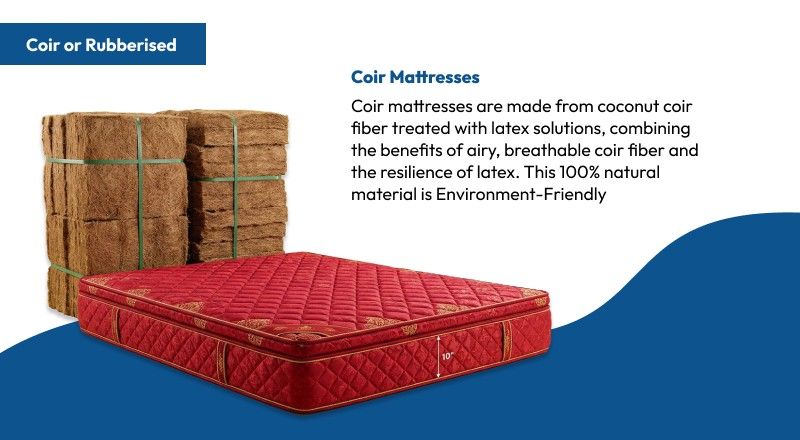
The classic Indian mattress. Made from compressed coconut fibre, often with rubberised binding. Firm, breathable, and very well suited to hot and humid climates. This is the mattress most of our parents and grandparents grew up on.
Coir suits firm-mattress sleepers, people in coastal cities, and anyone on a tight budget. It does not isolate motion well, so couples may feel each other’s movement. It can also start sagging in the middle after four or five years if it is a low-quality variant.
Price range: 3,000 to 12,000 rupees for a queen-size.
Cotton mattresses (the old “rui ka gadda”)
The traditional cotton-stuffed mattress is still around in many Indian homes, especially in smaller towns. It is cheap, breathable, easily replaced, and can be re-stuffed by a local “dhunai-wala”. The downside is that it flattens quickly, harbours dust, and offers almost no spinal support.
If your back is fine and you are buying for a guest room or a temporary setup, cotton is acceptable. For daily use as your main bed, most orthopaedic specialists would advise against it.
Memory foam
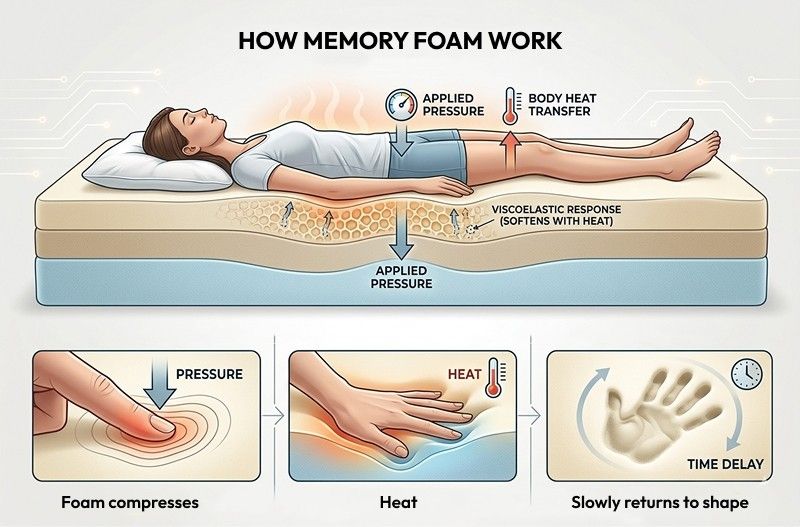
This is the material that changed the Indian mattress market. Memory foam contours to your body, distributes weight evenly, and absorbs movement. If your partner gets up at 6 AM and you want to keep sleeping, memory foam is your friend.
The catch is heat. Memory foam can sleep warm, especially in Indian summers. Brands have responded with cooling gel infusions, copper-infused foam, and open-cell variants, which help to varying degrees. If you live in Bengaluru or Pune, where the climate is gentle most of the year, this is less of an issue. If you are in Hyderabad, Chennai, or Delhi NCR, look for memory foam that explicitly addresses heat dissipation.
Memory foam is generally good for side sleepers, couples, and people with mild back issues.
Price range: 8,000 to 35,000 rupees depending on density, thickness, and brand.
Latex
Latex comes in two forms. Natural latex, which is made from rubber tree sap, and Synthetic latex, which is chemically produced. Natural latex is breathable, durable, hypoallergenic, and surprisingly cool, making it a strong fit for Indian conditions. The downside is the price. A good latex mattress will rarely cost less than 25,000 rupees.
Latex has a slight bounce, is more responsive than memory foam, and tends to last longer. Ten to twelve years is common. It is heavier, which makes flipping or rotating harder.
If you sleep hot and have the budget, latex is a strong choice.
Bonnell spring
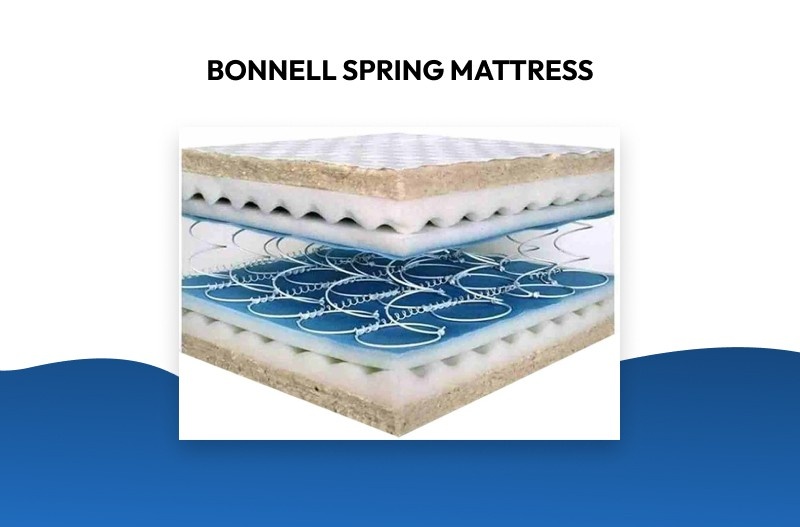
The classic interconnected coil mattress is often paired with foam or cotton padding on top. It is bouncy, firm, and inexpensive. The disadvantage is that the coils move together, so motion transfer is poor for couples.
Bonnell springs are best for stomach sleepers, kids’ rooms, and budget setups. Most legacy brands like Sleepwell, Kurlon, and Peps have decent Bonnell options under 12,000 rupees.
Pocket spring
Each spring sits in its own fabric pocket, which means it compresses individually under pressure. This gives you targeted support, far better motion isolation, and a more “premium” feel underfoot. Couples especially benefit from pocket springs.
Pocket spring mattresses are usually combined with a foam or latex comfort layer on top, which is why they fall in the mid to premium range.
Price range: 15,000 to 50,000 rupees.
Orthopaedic foam
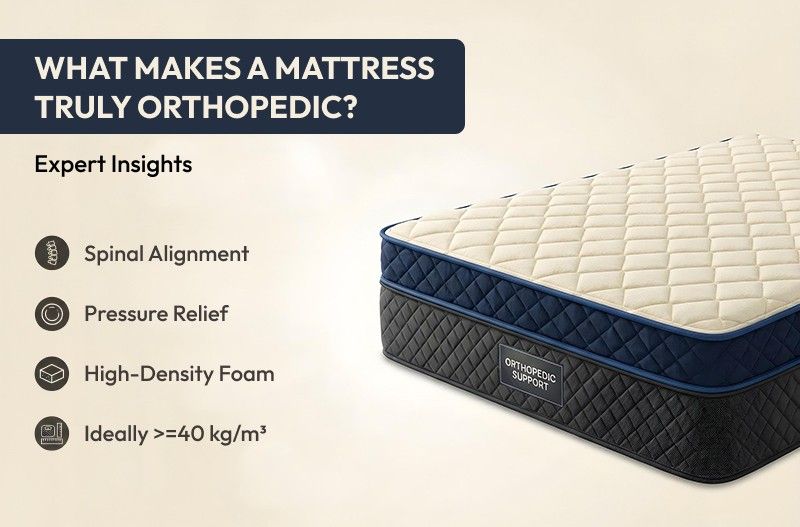
“Orthopaedic” is not a regulated term in India. Any brand can label any mattress as orthopaedic. What you should actually look for is high-density foam, ideally 40 kg/m³ and above, with a firm but supportive feel, designed to keep the spine aligned.
Reputed brands like Duroflex, Sleepwell, and Wakefit have orthopaedic lines that have been reviewed by orthopaedic specialists. That said, do not assume that any mattress with the word “ortho” on the label is medically superior.
Hybrid mattresses
A hybrid combines a pocket spring base with a foam, latex, or gel comfort layer on top. The idea is to get the support and breathability of springs with the cushioning of foam. For most couples, hybrid is the safest “we want everything to work” choice.
Hybrids start around 18,000 rupees and can go up to 60,000 plus.
SmartGRID and gel-based mattresses
Newer to the Indian market, brands like The Sleep Company have built a category around grid-based polymer mattresses. The grid structure flexes under pressure, allowing for both softness and support, while staying cool. They are also unusually durable.
These are premium products. Expect to spend 25,000 rupees and up. Whether they are worth it depends on whether the technology actually solves a problem you have. If you sleep hot, struggle with back pain, and have tried foam without success, they are worth a serious look.
Traditional cotton or coir versus modern layered mattresses
This deserves its own moment because it comes up in every Indian household. The question is usually some version of: “My grandmother slept on a coir mattress till she was 90 and was perfectly fine. Why do I need to spend 30,000 rupees on a hybrid?”
The honest answer is that you may not need to. If you are young, healthy, sleep on your back or stomach, and your body has adapted to a firm surface, a good coir mattress will serve you well for years. The reason most urban buyers move to layered mattresses is that they prioritise pressure relief, motion isolation, and longer-term spinal support, especially as desk jobs and screen time take a toll.
Here is a quick comparison to help you place yourself.
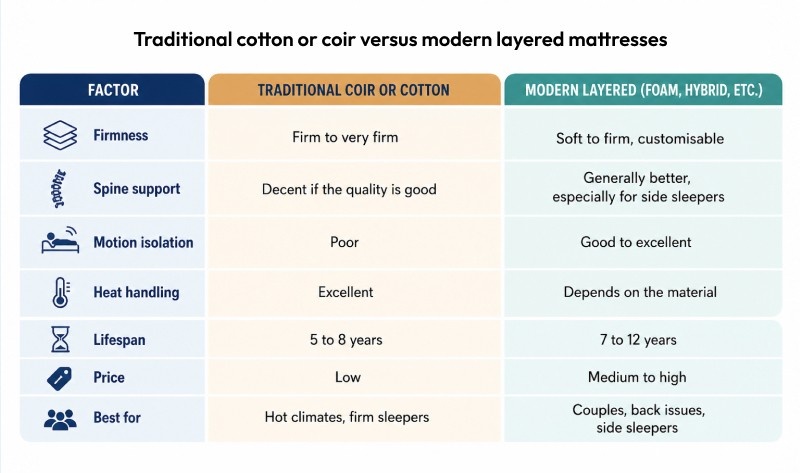
| Factor | Traditional Coir or Cotton | Modern Layered (Foam, Hybrid, etc.) |
| Firmness | Firm to very firm | Soft to firm, customisable |
| Spine support | Decent if the quality is good | Generally better, especially for side sleepers |
| Motion isolation | Poor | Good to excellent |
| Heat handling | Excellent | Depends on the material |
| Lifespan | 5 to 8 years | 7 to 12 years |
| Price | Low | Medium to high |
| Best for | Hot climates, firm sleepers | Couples, back issues, side sleepers |
Neither is universally better. They suit different bodies and different budgets.
Mattresses by sleeping position
Most people do not think about how they sleep until somebody points it out. Spend a few nights noticing the position you wake up in. That is your dominant sleeping position, and it should heavily influence your choice.
For Side sleepers
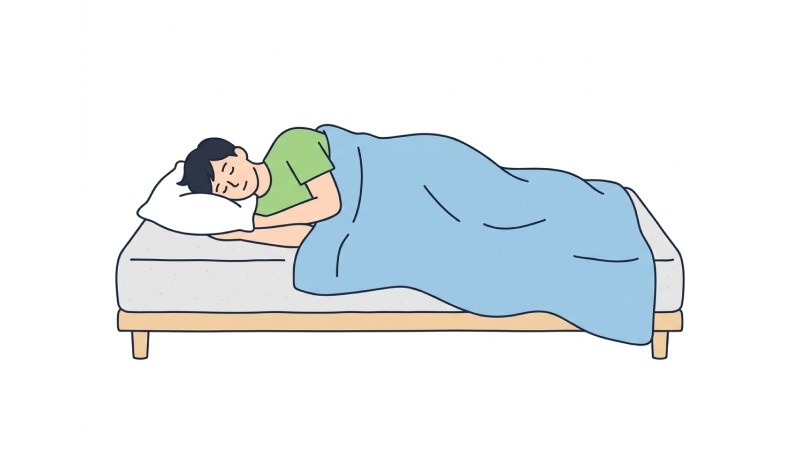
This is the most common position among Indian adults. Side sleepers need a mattress that cushions the hip and shoulder, which carry most of the body weight in this position. A mattress that is too firm will cause the shoulder to dig in, leading to numbness, and the hip to push up, throwing the spine out of alignment. Look for medium to medium-soft. Memory foam, latex, and softer hybrids work well.
For Back sleepers
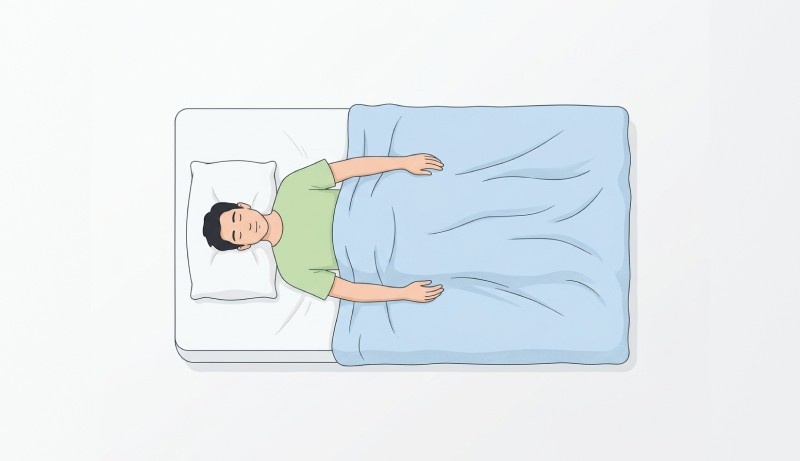
Back sleepers need spinal alignment. The lower back has a natural curve, and a mattress that is too soft will let the hips sink in, while one that is too firm will leave a gap under the lumbar area. Medium-firm is the sweet spot. Hybrids, orthopaedic foam, and quality pocket springs all do well here.
For Stomach sleepers
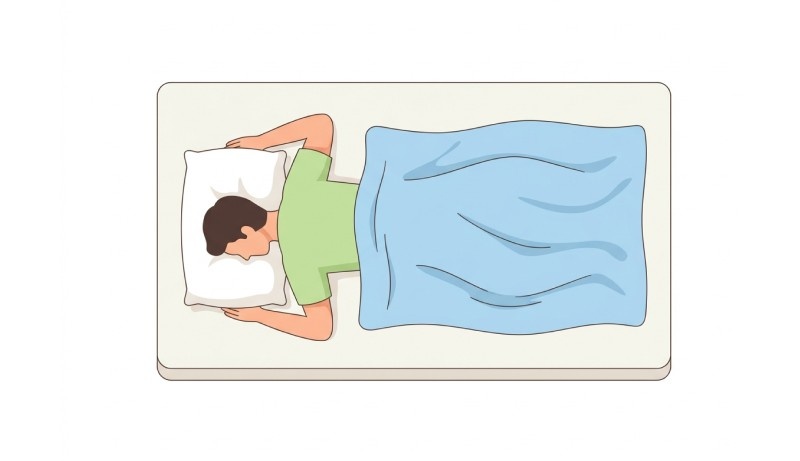
Stomach sleeping is the position most likely to cause back problems, because the lower spine arches downward against gravity. If you sleep on your stomach, you need a firm mattress that does not allow the hips to sink. Firm coir, firm orthopaedic foam, or a Bonnell spring with minimal cushioning work best.
For Combination sleepers
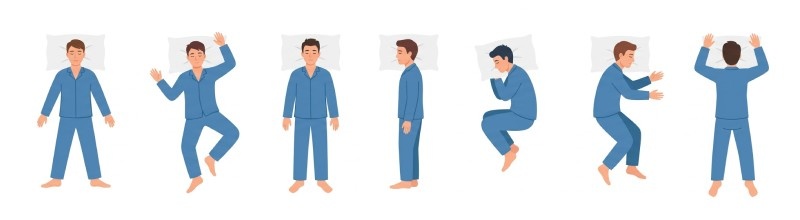
Most people shift positions through the night. If you fall asleep on your side and wake up on your back, you are a combination sleeper. The trick here is responsiveness. A mattress with good “bounce-back” lets you change positions easily without sinking and getting stuck. Latex and hybrids are typically the best fit.
For Couples

When two people sleep on the same mattress, motion isolation matters more than anything else. A pocket spring or memory foam mattress will absorb your partner’s tossing and turning. A Bonnell spring or coir will not. Edge support also matters for couples. A weak edge means the mattress sags when one person sits on the side, and over time, the whole bed feels uneven. If both partners have very different firmness preferences, look at brands offering dual-firmness or split mattresses. Duroflex and a few others do this in India.
Mattresses by health condition
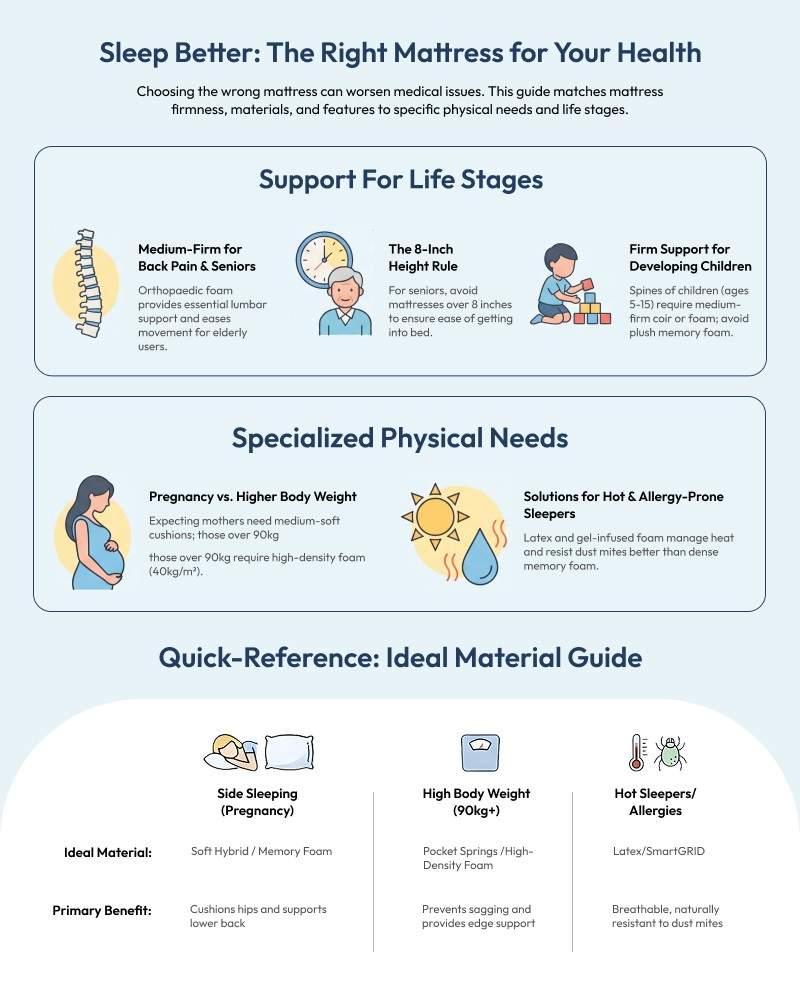
This is where buying carefully matters most. The wrong mattress will not just feel uncomfortable. It will worsen real medical issues over the years.
For back pain and spine issues
Talk to a physiotherapist if you can. Generally, medium-firm orthopaedic foam or a hybrid with good lumbar support is recommended. Avoid anything too soft or too firm. Brands like Duroflex and Wakefit have orthopaedic lines that have been clinically tested.
For senior citizens (60+ Age)
Older buyers need three things. Spinal support, ease of getting in and out of bed, and a surface that does not create pressure points. Mattresses that are too soft make it hard to sit up and stand. Too firm causes pressure on the hips and shoulders. Medium-firm orthopaedic mattresses work best. Also consider mattress height. A very thick mattress (above 8 inches) on an already-tall bed frame can be hard for elderly users to climb onto.
For children (5 to 15 years)
Kids are still developing, and their spines need firm support. A medium-firm coir, orthopaedic foam, or a basic hybrid is ideal. Avoid plush memory foam for young children. Hypoallergenic covers are useful, especially for kids prone to allergies or asthma.
For expecting mothers
Pregnancy often forces side sleeping, particularly on the left side. A medium-soft mattress that cushions the hip and supports the lower back makes a real difference. Memory foam or a soft hybrid is usually ideal during these months.
For people with higher body weight
If your body weight is on the higher side (above 90 kg), look for high-density foam (40 kg/m³ or more) and strong edge support. A standard 32-density foam mattress will sag within two years under heavier use. Hybrids and pocket springs handle weight better than pure foam.
For people who sweat even in winters
If you wake up sweating even in winter, your mattress is probably part of the problem. Latex, gel-infused foam, and SmartGRID style products handle heat far better than dense memory foam. Look for breathable fabric covers as well, ideally cotton or Tencel.
For allergy sufferers
Dust mites, fungal spores, and humidity-related allergies are common in Indian homes. Latex and high-density foam are naturally resistant. Look for mattresses with hypoallergenic, anti-microbial covers, and always pair them with a good mattress protector.
Mattresses by budget (But Why We Don’t Recommend Going This Way)
Before you look at price, understand this: don’t pick a mattress just because it fits your budget. Your sleep affects your health. If your mattress is not right, you can end up with body pain, poor sleep, and low energy every day.
A mattress is something you use for years. So choosing a cheap one that doesn’t suit your body can cost you more in the long run.
Instead, first figure out what you need, like your sleeping position, comfort level, and support. Then find the best option within your budget.
Your budget matters, but your comfort and health matter more.
Under 5,000 rupees
You are mostly looking at basic coir mattresses, low-density foam, or thin cotton. These are fine for a guest room, a hostel, or a temporary setup. Daily use for years on end is not advisable. Brands operating in this range include Kurlon’s entry models, SleepX, and various unbranded local options.
5,000 to 10,000 rupees
This is where the real budget category begins. You can find decent orthopaedic foam, entry-level memory foam, and good coir mattresses. Wakefit and Sleepwell both have offerings here. Expect five to seven years of comfortable use if you treat the mattress well.
10,000 to 20,000 rupees
The sweet spot for most first-time urban buyers. You get high-density foam, well-built hybrids, basic latex, and reliable pocket springs. Brands like Duroflex, Sleepyhead, Wakefit, and Sleepwell all compete in this range. Most people will find a mattress that lasts eight plus years with comfortable support.
20,000 to 40,000 rupees
Premium territory. You are looking at quality hybrids, full latex, SmartGRID products, and dual-comfort variants. The Sleep Company, SleepyCat, and the upper lines from Duroflex and Sleepwell all live here. The construction quality, comfort layers, and cooling features genuinely make a difference at this level.
Above 40,000 rupees
Luxury. Smart mattresses with adjustable firmness, full natural latex, or advanced grid-based products. Whether it is worth it depends entirely on your specific needs. A buyer with chronic pain, sleep disorders, or very specific climate requirements may genuinely benefit. A first-time buyer with no major issues will likely overpay.
A simple way to decide
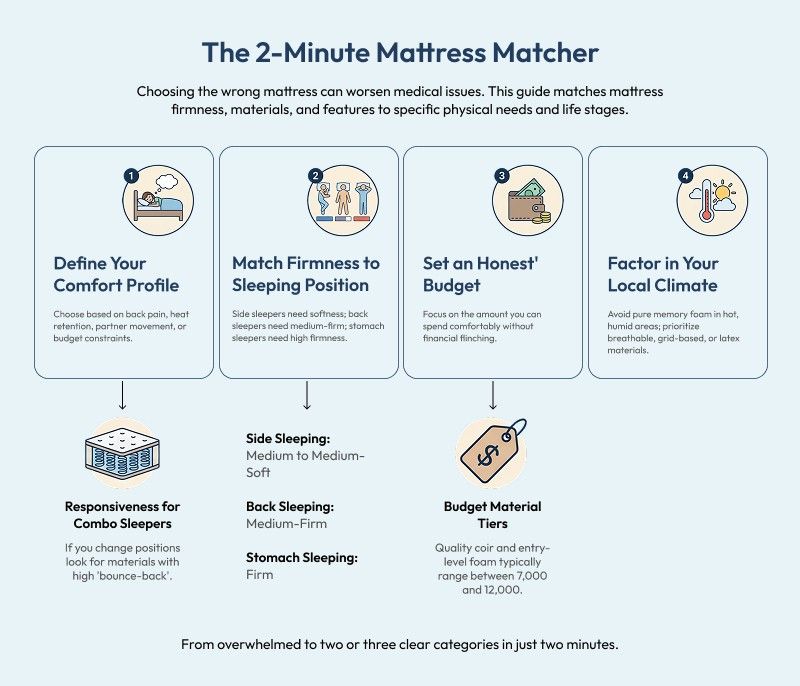
If everything above feels overwhelming, here is a four-question framework that gets you to a decent answer in two minutes.
Question 1: What is your primary concern? If it is back pain, prioritise orthopaedic foam or a hybrid with strong lumbar support. If it is heat, prioritise latex, gel infusion, or grid-based mattresses. If it is your partner waking you up, prioritise memory foam or pocket springs. If it is a budget, look at quality coir or entry foam in the 7,000 to 12,000 range.
Question 2: What is your dominant sleeping position? Side sleeper, go medium to medium-soft. Back sleeper, go medium-firm. Stomach sleeper, go firm. Combination sleeper, go for something responsive with good bounce-back.
Question 3: What is your honest budget? Not your dream budget. The amount you can actually spend without flinching. Match it to the tier above.
Question 4: Where do you live? Hot and humid, avoid pure memory foam and prioritise breathable materials. Cold and dry, most materials are fine.
That is it. Four questions. The answers narrow your choice down to two or three categories.
Your Guide To Mattress Toppers
Before we move on, there is a middle option that almost nobody talks about but that solves a very specific problem: the mattress topper.
A topper is a removable layer, typically 2 to 8 centimetres thick, that sits directly on your existing mattress under the fitted sheet. It does not replace your mattress. It changes how your mattress feels.
Why this matters for Indian buyers
Two situations come up repeatedly. First, you have a mattress that is structurally sound but either too firm for your liking or starting to feel a little flat. A topper buys you another two to three years of comfortable use at a fraction of a replacement cost. Second, you just bought a mattress that is slightly firmer than you expected. Rather than going through a return, a thin topper adjusts the feel overnight.
When a topper makes sense
Use a topper if:
Your mattress is less than five years old, supportive, and not visibly sagging, but feels uncomfortable for your body.
You have a guest room or rental property where a full mattress upgrade does not make financial sense.
You are pregnant and need a temporary softness adjustment without buying a new mattress.
You are a hot sleeper on a foam mattress and want a breathable surface layer.
When a topper is the wrong answer
Do not use a topper to fix a dead mattress. If the mattress is sagging, lumpy, or more than eight years old, no topper will solve the underlying structural problem. You are just adding a soft layer on top of a sinkhole. Replace the mattress.
Types of toppers available in India
Memory foam toppers are the most common. They soften a firm mattress and relieve pressure on the shoulders and hips. The heat-retention issue that applies to memory foam mattresses applies here too. In cities like Chennai or Nagpur, look for gel-infused variants.
Latex toppers are breathable, naturally hypoallergenic, and more durable than foam. They feel bouncier than memory foam. If you already sleep hot, a natural latex topper is a better choice.
Cotton and wool toppers are thin and breathable, more comfort layers than support layers. Good for someone who wants a slightly softer surface without any material change to firmness.
Mattress sizes for Indian homes
Mattress sizing in India is messier than it should be. The same “queen” might mean 60×78 inches at one brand and 60×75 at another. Always measure your bed frame before you order.
Here are the common sizes in the Indian market:
| Size | Dimensions (Inches) | Dimensions (Feet) | Suits |
| Single | 36 x 72 or 36 x 75 | 3 x 6 or 3 x 6.25 | One adult, kids’ rooms |
| Diwan | 30 x 72 or 36 x 72 | 2.5 x 6 or 3 x 6 | Diwans, daybeds |
| Double | 48 x 72 or 48 x 75 | 4 x 6 or 4 x 6.25 | Two thin sleepers, snug fit |
| Queen | 60 x 72 or 60 x 78 | 5 x 6 or 5 x 6.5 | Most Indian master bedrooms |
| King | 72 x 72 or 72 x 78 | 6 x 6 or 6 x 6.5 | Larger rooms, taller users, couple with a child |
| Super King | 72 x 84 or 78 x 78 | 6 x 7 | Very large bedrooms |
Two things to keep in mind.
First, Indian bed frames often differ from imported ones. An IKEA queen frame is not the same as a queen from a local carpenter. Always measure the inner cavity of your bed before ordering.
Second, room size matters more than people realise. A 6×6 king mattress in a 10×10 bedroom leaves you with very little walking space once you add a wardrobe and side tables. Visualise the layout before committing.
For kids, custom sizes are common. Most brands offer custom dimensions at a small premium. Bunk beds typically take a single mattress no thicker than 6 inches, since thicker ones make the upper bunk unsafe.
What to check before you pay
Before you click buy or sign at the showroom, run through this list.
Firmness rating. Most brands now rate firmness on a scale of 1 to 10, or in tiers (soft, medium, firm). Look at customer reviews to verify, because brand-claimed firmness is often softer than reality.
Foam density. For pure foam mattresses, density is everything. 32 kg/m³ is the bare minimum. 40 kg/m³ and above is good. 50 plus is premium.
Trial period. Online brands now routinely offer 30, 90, or even 100-night trials. Use it. Your body needs at least two weeks to adjust to a new mattress, so do not judge it on night one. If after a month it still feels wrong, return it.
Warranty. Standard warranties run 7 to 10 years. Read the fine print. Most warranties cover sagging beyond a certain depth (usually 1.5 inches) but exclude wear, stains, and improper use. Check whether warranty service includes pickup and delivery in your city.
Certifications. CertiPUR-US (for foam), OEKO-TEX (for fabric), and India’s own BIS markings indicate that the materials have been tested for harmful substances. Not every good mattress has every certification, but they add a layer of confidence.
Online versus offline. Buying online gets you better prices, return policies, and broader options. Buying offline lets you actually lie on the mattress for ten minutes before deciding. The right answer depends on you. A good middle path is to test a similar model in a showroom, then buy online if available cheaper.
Festive timing. If you are not in a rush, the Big Billion Days, Great Indian Festival, Diwali, and end-of-financial-year sales (March) consistently offer the best mattress deals of the year. Discounts of 30% to 60% are routine on premium brands during these windows. Combining festive pricing with a coupon stack can knock another 5% to 10% off.
Top Indian mattress brands at a glance
This is meant as a quick reference, not a ranking. Each of these brands has loyalists and critics. The right one for you depends on your priorities.
| Brand | Best For | Typical Price Range | Notable Feature |
| Wakefit | Back pain, value-conscious buyers | 7,000 to 25,000 | Honest pricing, strong orthopaedic line |
| Duroflex | All-round, medical-grade | 6,000 to 45,000 | Doctor-endorsed orthopaedic range |
| The Sleep Company | Premium, hot sleepers | 15,000 to 70,000 | SmartGRID technology |
| Sleepyhead | Memory foam, couples | 9,000 to 40,000 | Multi-layer construction |
| SleepyCat | Couples, cool sleeping | 9,000 to 35,000 | Gel memory foam |
| Sleepwell | Legacy, mid-range | 6,000 to 35,000 | Wide retail availability |
| Kurlon | Traditional, legacy | 4,000 to 30,000 | Coir and foam blends |
| Springtek | Eco-friendly, budget | 5,000 to 22,000 | Latex hybrid options |
| Peps | Spring mattresses | 7,000 to 28,000 | Strong spring construction |
| Centuary | Budget orthopedic | 5,000 to 15,000 | Affordable ortho options |
The point is not to pick the “best brand”. It is to recognise that several brands offer good products at every price point. Your choice should depend on which model from which brand fits your specific need, not on brand loyalty alone.
If you are buying online, comparing prices across the brand’s own site, Amazon, Flipkart, and any active coupon offers is genuinely worth ten minutes of your time. The same model can vary by 2,000 to 5,000 rupees across platforms in any given week.
Looking after the mattress you bought
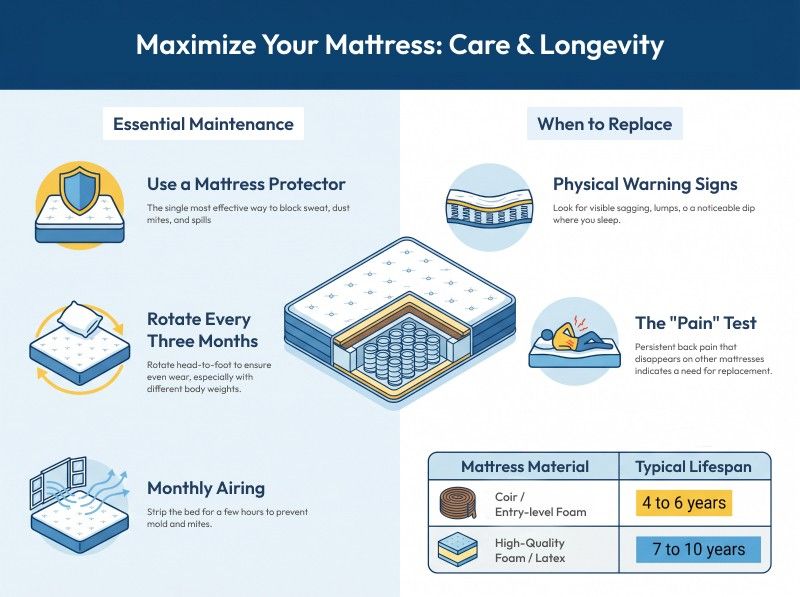
A good mattress, treated badly, will not last. A good mattress, treated well, will outlast its warranty. Here is the maintenance side most buyers overlook.
Use a mattress protector, this is the single most useful thing you can do. A protector keeps out sweat, dust mites, spills, and stains, all of which can void your warranty. A decent protector costs 800 to 2,500 rupees and saves your investment.
Rotate every three months. Most modern mattresses are not designed to be flipped, but they should be rotated head-to-foot to ensure even wear. If you and your partner have very different body weights, this matters even more.
Air it out once a month, strip the bed and let the mattress breathe for a few hours. In humid cities, this prevents mould and mites.
Clean spot stains immediately. Use mild detergent, a damp cloth, and never soak the mattress. Foam and latex can take days to dry fully if soaked.
Know when to replace. Visible sagging, persistent back pain that disappears on other mattresses, lumps, or a noticeable dip where you usually sleep are all signs. Most quality mattresses last 7 to 10 years. Coir and entry-level foam may need replacement in 4 to 6.
Frequently asked questions when purchasing mattresses in India
Which mattress is best for back pain in India?
Most orthopaedic specialists recommend a medium-firm mattress with high-density foam, ideally above 40 kg/m³, or a hybrid with strong lumbar support. Brands like Duroflex and Wakefit have specifically engineered orthopaedic lines. The “best” depends on your weight, sleeping position, and severity of pain, so try to test in a showroom or use a brand with a proper trial period.
What is the difference between memory foam versus orthopaedic mattress?
Memory foam is a material. Orthopaedic refers to design intent, meaning the mattress is built to support the spine. An orthopaedic mattress can be made of memory foam, high-density foam, latex, or a hybrid. So the two are not opposites. You can have an orthopaedic memory foam mattress.
How long does a mattress last in India?
Coir mattresses typically last 5 to 8 years. Memory foam lasts 7 to 10 years. Latex and quality hybrids can go 10 to 12 years. Use, weight, climate, and care all affect lifespan.
Is a latex mattress good for the Indian climate?
Yes, particularly in coastal and humid regions. Latex breathes well, resists mites and mould, and stays cooler than memory foam. The catch is the price.
What mattress should I buy for my parents?
A medium-firm orthopaedic mattress is usually safest. Avoid very thick or very soft variants. Make sure the bed height is comfortable for them to get in and out of without strain.
Are online mattresses as good as showroom mattresses?
The materials and construction can be identical. The trade-off is that you cannot test it before buying. This is why trial periods matter so much for online purchases.
Should I buy during festive sales?
If you can wait, yes. Diwali, Big Billion Days, Great Indian Festival, and end-of-March sales consistently offer 30% to 60% discounts. Combining festive prices with a coupon usually gets you the best deal of the year.
What firmness should I pick if I am not sure?
Medium-firm is the safest default. It works for most sleeping positions and most body types. You can always add a topper if it feels too firm later.
Is a smart mattress worth the money?
For most first-time buyers, no. Smart mattresses make sense if you have specific sleep tracking goals, chronic conditions, or a clear preference for adjustability. Otherwise, the basics matter more than the gadgetry.
Do I really need a mattress protector?
Yes. A protector adds 4 to 6 years to your mattress’s life and protects your warranty. Skipping it is the most common buying mistake.
Can a bad mattress actually cause back pain?
Yes. A mattress that has lost its support, sagged, or never had the right firmness can absolutely cause or worsen back pain. If you wake up with pain that disappears within an hour of getting up, the mattress is a likely suspect.
How thick should a mattress be?
For adults, 6 inches is the minimum. 8 inches is comfortable. Anything above 10 inches is premium territory and useful only if you genuinely need extra cushioning. For kids and bunk beds, thinner is often safer.
Is it okay to put a mattress directly on the floor?
For short periods, yes. Long term, no. Foam and latex mattresses need airflow underneath. Floor placement leads to moisture build-up, mould, and warranty issues.
GrabOn’s Final Say
Buying a mattress is one of those decisions that does not feel important until you have made the wrong one. The good news is that the Indian market today has matured to the point where you do not need to spend a fortune to sleep well. A 12,000 rupee orthopedic foam mattress from a credible brand will treat your body better than a 60,000 rupee imported model that looks impressive but does not match your sleeping style.
Take your time. Use trial periods. Read the warranty. Wait for a sale if you are not in a rush. Watch out for the festive windows. And remember: the most expensive mattress is not the best one. The right one is the best one.
Aaaand, Sleep well!