



Fashor Coupons Codes & Discounts
Best 7 Coupons & Offers last validated on October 27th, 2026
- All (7)
- Coupons (1)
- Offers (6)
Existing User
- All (7)
- Coupons (1)
- Offers (6)
Flat Rs 500 OFF On Orders Above Rs 3999
- Save Rs 500 OFF on your purchases
- The minimum cart value requires Rs 3999
- Apply the given code at the checkout page to avail the deal
- The discount is applicable to all users
Sitewide Offer: Grab Up To 70% OFF On All Orders
- Save up to 70% OFF on your purchases
- The offer is valid for all users
- The prices start at Rs 579 & above
- Categories: kurtas, occasion wear, fusion wear, and more
- Also, get free shipping on orders above Rs 999
Avail Up To 60% OFF On Wedding Edit
- Shop for the best wedding collection at the best price
- Save up to 60% OFF on your purchases
- The prices start at Rs 2519 & above
Avail Up To 55% OFF On Kurta Sets
- Get up to 55% OFF on selected items
- The offer is applicable for Kurta Sets
- The prices start at Rs 699 & above
Top Cashback Cards

AU Small Finance Bank
LIT Credit Card
Fashor Coupon Codes & Promo Codes
BOGO Zone: Buy 1 Get 1 FREE On All Orders
- Avail BOGO deal for all orders
- Buy 1, get 1 free on all purchases
Get Flat 15% OFF On First App Purchase
- Avail flat 15% OFF on your first order
- The discount is applicable to app users only
Get Free Shipping On Orders Above Rs 999
- Enjoy free shipping on your purchases
- The minimum cart value requirse Rs 999 & above
- The offer valid for all users
Verified Fashor Coupons Codes & Discounts For Oct 2026
| Category | Fashor Coupon Codes & Promo Codes |
| Sitewide Offer | Grab Up To 70% OFF |
| Wedding Edit | Avail Up To 60% OFF |
| Kurta Sets | Up To 55% OFF |
| App Discount | Flat 15% OFF On First Order |
| On Orders Above Rs 999 | Free Shipping |
About Fashor
Fashor started in 2017 as a women's ethnic-wear label with one stubborn idea: make clothes that look designer but do not cost designer money. Co-founded by Vikram and Priyanka Kankaria, the brand grew from a tiny garage operation of roughly 300 square feet into a name that more than 10 lakh customers have bought from. Priyanka came from fashion design, Vikram from a finance and scaling background, and that split shows in the product. The clothes chase trend and look, the business chases value pricing and reach.
The average price point sits around Rs 1,000 a piece, which is the whole pitch in one number. You get embroidered kurtis, kurta sets, dresses, and party looks at a price that feels closer to a value brand than a designer one. New designs land constantly, with the brand pushing 400-plus fresh styles a month and small batches dropping every few days, so the catalogue you see this week is not the one you saw last month. That fast-fashion cadence is deliberate. It keeps regulars coming back to check what is new.
Fashor is now an omnichannel brand, not just a website. You can buy on fashor.com and the Fashor app, on marketplaces like Myntra, Ajio, and Nykaa Fashion, and in person at exclusive brand outlets and large-format stores. The brand has been opening physical stores across the south, in Bengaluru, Chennai, and Coimbatore, in two formats: regular Fashor stores for the value range and Fashor Luxe for the premium, occasion-led pieces. Sara Ali Khan came on as the brand ambassador, fronting the "Dil Se Indian" campaign that ran across all these channels.
One number worth keeping in mind: over half of Fashor's customers are in tier-2 and tier-3 cities, which is unusual for a D2C fashion brand. That shapes how the brand sells, with cash on delivery, frequent discounts, and a wide size range from S to 5XL. Most Fashor saving comes from timing a first order or a festive sale rather than hunting an obscure code, and the live Fashor coupons on GrabOn make it easy to see what is actually running before you check out.
What Fashor Sells
Fashor is women's wear, end to end ethnic and fusion, with the catalogue built around everyday pieces first and occasion wear layered on top. The brand carries thousands of live styles at any time, so what follows is the shape of the range rather than a full list. Here is what each part is actually good for.
Kurtis and kurtas
This is the core of the brand and where the value pricing bites hardest. You get straight-cut, A-line, and anarkali kurtas in cotton, rayon, muslin, and georgette, with print and embroidery options for both daily wear and dressier days. Plenty of single kurtas sit under Rs 1,300, which is the everyday-wear sweet spot. If you are building a rotation of work or college kurtis without spending much, this is the section to live in.
Kurta sets and sharara sets
The sets are where Fashor does its festive and party-ready work. You will find two-piece and three-piece kurta sets, anarkali sets, sharara sets, and palazzo combinations, in both ethnic prints and embroidered finishes. Many sets land in the Rs 1,500 to Rs 3,000 band, with cotton sets at the lower end and the heavier embroidered or Luxe pieces higher up. A coordinated set saves you the matching headache, which is why these sell well in wedding and festive months.
Dresses and gowns
For Indo-western and party looks, the dresses and gowns cover the gap between full ethnic and full western. Think flowy maxi dresses, embellished gowns for receptions, and shorter dresses for casual outings. The gown range is where Fashor Luxe shows up most, with the more detailed, occasion-grade pieces priced above the everyday line.
Indo-western and fusion wear
This is the brand's stated identity, blending modern silhouettes with Indian craft. Co-ord sets, fusion tunics, dhoti and drape styles, and jacket-led looks fall here. It suits a buyer who wants something Indian but not traditional, the kind of outfit that works for an office party or a casual function without reading as a full festive look.
Bottoms and pants
The separates range covers palazzos, pants, skirts, and shararas you can buy on their own to pair with kurtas you already own. These are useful as wardrobe fillers, since a couple of well-chosen bottoms stretch the kurtis you have into more outfits without buying full sets.
Festive, party and wedding wear
Around the festive and wedding calendar, Fashor leans into occasion wear: heavier embroidery, richer fabrics, anarkalis, and gowns aimed at guests rather than the bride. The Luxe line and limited collections carry the most detailed pieces. If you are shopping for a wedding-season function on a sensible budget, this is where the brand competes directly with the bigger ethnic names, often at a lower ticket.
Best Fashor Offers
Fashor runs a discount-heavy model rather than a fixed-price one, so there is almost always something live, a first-order code, a BOGO deal, a festive sale, or a clearance zone. The trick is knowing which lever saves the most for your cart. Treat the figures below as the usual pattern to verify on the live page, not fixed quotes, since fashion offers rotate fast and change with the season.
| Fashor Offer Type | Offer Details | Best For | How to Use |
|---|---|---|---|
| First-order code | Around 10 percent off your first order, the common welcome shape for new shoppers | Anyone buying from Fashor for the first time | Sign up on the site or app, then apply the welcome code at checkout |
| BOGO zone | Buy One Get One style offers on a dedicated set of styles | Buyers wanting two pieces for the price band of one | Shop the BOGO zone, where the offer applies automatically on eligible items |
| Festive and seasonal sale | Sitewide percentage cuts during Diwali, wedding season, and end-of-season events | Shoppers timing a bigger ethnic-wear haul | Buy during the live sale window, stack a code where allowed |
| Cart-value threshold | A flat amount off above a minimum cart, for example Rs 500 off above a set value | Buyers building a multi-piece order | Add enough to cross the stated minimum, then apply the code |
| Discount or half-price zone | A clearance section with steeper markdowns on past-season styles | Value hunters who do not need the newest design | Browse the offer zone, no code usually needed |
| Free shipping | Free delivery, often on prepaid orders or above a cart value | Anyone paying by UPI or card upfront | Choose prepaid at checkout to skip the shipping fee |
Lined up against the usual offer angles, here is the honest read for Fashor. The best coupon-code offer is the first-order welcome discount, which is the easiest money a new buyer saves. The best no-code deal is the BOGO zone or the clearance section, where the price is already cut and you do not need to enter anything. There is no dedicated India bank-card aisle the way a big marketplace runs one, though your card or UPI app may carry its own cashback that applies separately, so check your bank app before you pay. The best app angle is simply that codes and drops sometimes appear in the Fashor app first, so it is worth installing if you buy often. The best new-user offer is that welcome code combined with the BOGO zone. The best seasonal offer lands during Diwali and the wedding-season weeks, when sitewide cuts run deepest, and the steepest category value usually sits in the discount zone on past-season pieces. GrabOn keeps the verified Fashor coupons aligned with what is live, so check the page before you commit and do not assume an old code still works.
Price Range and Value
Rs 1,000 is the number Fashor built itself around, the average price point it set out to hit for designer-looking ethnic wear. The real spread runs wider, from sub-Rs 1,000 everyday kurtis to Luxe occasion pieces several times that. Knowing the bands helps you judge whether a given piece is a genuine deal or just a sale tag, and it also matters for the GST you pay, which we cover further down. Here is how the pricing tends to sit.
| Range | Rough Price Band | What You Get | Best For |
|---|---|---|---|
| Everyday kurtis | Under Rs 1,300 | Single cotton, rayon, or muslin kurtas, prints and light embroidery | Work, college, and daily ethnic wear on a budget |
| Kurta sets | Rs 1,500 to Rs 3,000 | Two and three-piece sets, anarkalis, sharara and palazzo combinations | Festive days and coordinated party looks |
| Dresses and fusion | Rs 1,200 to Rs 3,000 | Indo-western dresses, co-ords, and casual gowns | Office parties and casual functions |
| Fashor Luxe and occasion | Rs 3,000 and above | Heavier embroidery, richer fabrics, reception-grade gowns and sets | Weddings and bigger festive occasions |
| Discount zone | Steeply marked down | Past-season styles across categories | Value hunters not chasing the newest design |
On value, the honest take is this: Fashor is priced to undercut the established ethnic brands on a like-for-like look, and for everyday kurtis and mid-range sets it usually does. Where you have to think harder is the occasion and Luxe end, where the price climbs and you are paying for embroidery and fabric weight that you should check in the product photos and reviews before buying. The brand's own framing, high-fashion looks at pocket-friendly pricing, holds best in the daily and festive-set ranges rather than at the top.
A couple of value habits help here. First, the discount zone is genuinely worth checking before you browse new arrivals, since a past-season kurti at a clearance price is often the same fabric and make as a current one. Second, because the brand drops new styles so fast, a piece you like but do not need urgently will often turn up in a sale within a few weeks, so adding to wishlist and waiting is a real saving strategy with Fashor specifically.
One thing to weigh against the value: returns on discounted festive buys come back as a gift card rather than cash, which we explain in the returns section. So a cheap festive piece is only a clean deal if you are fairly sure of the fit. That nudges you toward checking the size chart properly on the lower-priced occasion items, where the saving is real but the return is restricted.
How to Use a Coupon
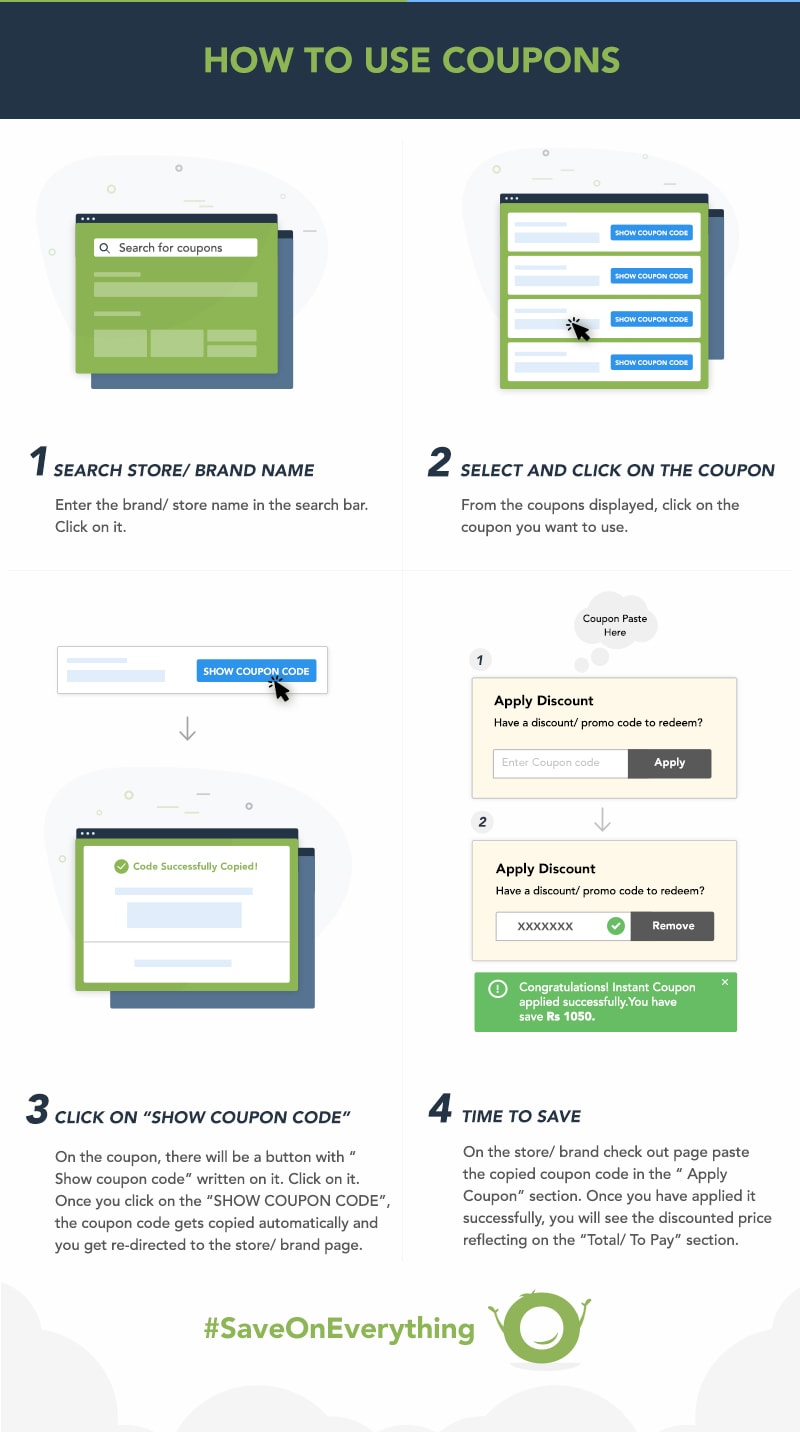
Applying a Fashor coupon is a short process, but the order of steps matters, since the code field and your payment choice both move the final number. The flow is much the same on the website and the Fashor app. Here is the sequence.
- Open the Fashor listing on GrabOn and copy the current promo code, or note the live offer that fits what you want to buy, such as the first-order or festive deal.
- Go to fashor.com or open the Fashor app and add the kurtis, sets, or dresses you want to your bag.
- If the offer is a new-user welcome code, sign up or log in first, since the discount only fires on an eligible account.
- Open your cart or bag and look for the coupon or promo code field, usually labelled to enter a code near the order summary.
- Enter the copied code exactly as shown, keeping the case the same, then apply it.
- Confirm the discount has changed the order total before you pay, the new amount should be visibly lower, not just the listed price.
- Pick prepaid by UPI or card to grab free shipping where it applies, or choose cash on delivery if you prefer to pay on arrival.
- Place the order and save the confirmation, since you will need it if you later raise a return or exchange.
The discount has to show on the final summary, not just on a banner, so always check the number moved before you complete payment. If a code refuses to apply, the troubleshooting section below covers the usual reasons. Two habits help specifically with a fast-fashion brand like this. First, decide between prepaid and cash on delivery before you apply the code, since prepaid often gets you free shipping that a COD order does not, and that shipping saving can beat a small percentage code on a low-value cart. Second, if you are shopping the BOGO or discount zone, check whether a code even stacks there, because an already-cut price often blocks an extra coupon, and you may be better off buying the cheaper item outright.
Coupon Not Working
A Fashor code that will not apply usually fails for a plain, fixable reason tied to the offer terms, not a website glitch. Because this is a single fashion brand rather than a marketplace, the causes are fewer but specific. Run through these before you give up on a deal.
- The code has expired. Fashion promos rotate fast, so pull a fresh code from the live GrabOn listing rather than reusing an old one.
- It is a new-customer-only offer. A welcome code such as a first-order discount only fires on a fresh account with no prior order, not on a repeat purchase.
- Minimum cart value not met. A flat-amount code, for example Rs 500 off above a set value, needs the cart to cross that minimum before it triggers.
- Already-discounted item. BOGO, festive, or clearance-zone prices often block an extra code, since the price is already cut.
- Category or collection exclusion. Some codes only cover specific collections and skip Luxe or limited pieces, so check what the offer actually applies to.
- Case or spacing error. Type the code exactly as shown with no trailing space, since the field reads a stray space as a wrong code.
- App-only or web-only restriction. A code meant for the Fashor app may not work on the website and the reverse, so try the channel the offer names.
- One code per order. Fashor checkouts usually take a single coupon, so you cannot stack two codes on the same cart.
- Wrong payment method. If an offer is tied to prepaid or a specific method, a cash-on-delivery order may not qualify, so switch to prepaid and retry.
- Pincode or serviceability issue. If your area is not serviceable, the order can stall before the code resolves, which looks like a coupon error but is a delivery one.
- Stale cart page. Refresh or reopen the bag so it reads the current price before you re-enter the code.
- Account already used the offer. Welcome and one-time codes are tracked per account, so a second attempt on the same login fails.
If the code still refuses after all that, the offer has probably lapsed or does not fit your cart. Check the live Fashor listing for the current valid code, and weigh whether the BOGO or discount zone gets you a better all-in price than chasing a code at full price. One last thing that catches tier-2 and tier-3 buyers in particular: confirm your pincode is serviceable and your preferred payment method is accepted for your area, since a COD block or a delivery limit can stop an order in a way that looks like a broken coupon.
More Ways to Save on Fashor
Beyond a single promo code, the bigger Fashor savings come from how and when you buy. A fast-fashion ethnic brand rewards timing and patience more than coupon hunting, so the moves below tend to save more than chasing a one-off code.
- Use the first-order welcome offer. New shoppers get a sign-up discount, often around 10 percent, and sometimes a Buy One Get One deal in the BOGO zone. It is the easiest saving on your first cart, so do not place that order logged out as a guest.
- Shop the discount or half-price zone first. Past-season kurtis and sets sit here at steep markdowns, often the same fabric and make as current styles. Check it before you browse new arrivals, since the design difference is usually small.
- Time a festive or wedding-season haul. The deepest sitewide cuts land around Diwali, the wedding months, and end-of-season events, so a bigger ethnic-wear order saves most if you can wait for one of those windows.
- Go prepaid for free shipping. Paying by UPI or card upfront often gets you free delivery that a cash-on-delivery order does not, so on a smaller cart the prepaid route can save more than a small code.
- Wishlist and wait. Because new designs drop every few days, a piece you like but do not need now will often turn up in a sale within weeks. Save it and watch rather than buying at full price.
- Install the Fashor app. Codes and new drops sometimes appear in the app before the website, and app-only offers turn up around sale events, so it is worth having if you buy ethnic wear regularly.
- Buy separates to stretch your wardrobe. A couple of well-chosen bottoms or a fusion top pair with kurtas you already own, which is cheaper than buying full new sets each time.
- Check your bank or UPI app for its own cashback. Fashor itself does not run a big bank-card aisle, but your card or a UPI app may carry a cashback offer that applies on top, separate from the Fashor code.
The short version: the first-order code plus a well-timed festive sale, paid prepaid for free shipping, is the cleanest way to keep the spend honest. A code on top is a bonus, not the main event. And for a discounted festive piece, remember the return comes back as a gift card, so the saving only counts if you are sure of the fit before you buy.
Payment, UPI, Cards and EMI
Fashor bills in rupees as a domestic Indian brand, so paying is straightforward, with the usual mix of prepaid and cash on delivery that Indian fashion shoppers expect. The choice you make at checkout does affect shipping and sometimes the offer, so it is worth a quick think before you pay.
Prepaid covers UPI, credit cards, and debit cards. UPI through Google Pay, PhonePe, or Paytm is the fastest route and the most common way Fashor's younger and tier-2 buyers pay. The main reason to go prepaid is that free shipping often attaches to prepaid orders, so paying upfront by UPI can save the delivery fee that a cash order would carry. If your cart is small, that shipping saving can matter more than a percentage code.
Cash on delivery is available and genuinely matters for this brand, since more than half of Fashor's customers sit in tier-2 and tier-3 cities where COD is still the trusted default for a first order. You pay the courier on arrival, in cash or sometimes by UPI at the door, depending on the partner. The trade-off is that COD orders may not get the free-shipping perk and can be slightly slower to dispatch, so once you trust the brand, switching to prepaid is usually the cheaper habit.
On no-cost EMI, treat it as cart-size dependent. A single Rs 1,000 kurti is not an EMI purchase, but a larger festive or Luxe order, or a multi-piece wedding-season haul, may cross the threshold where a card EMI or a pay-later option becomes available at checkout. Whether no-cost EMI shows up depends on the cart value, your card, and the current payment partners, so check the options on the payment screen rather than assuming it is there. For most everyday Fashor carts, the question never comes up.
One practical point on offers and payment: Fashor does not run the big bank-card-day aisle that a marketplace like Myntra does, so do not expect a built-in HDFC or SBI extra-discount tab on the Fashor checkout. What can still apply is your own card or UPI app's cashback, which sits outside Fashor's coupon and stacks on top if eligible. Check your bank app for a live offer before you pay, since that is where the extra few percent hides on a domestic fashion order.
Returns and Exchanges
The return terms are where a Fashor order most often surprises people, so read this before you buy festive or discounted pieces. The headline is that returns and exchanges are allowed within a set window, but the refund form depends on what kind of offer you bought under, and that catch is easy to miss.
The return window runs from delivery, commonly cited as up to 15 days, though some pages mention a shorter window, so confirm the exact number on your order page before you assume it. The clock starts when the package arrives, not when you open it, so do not sit on a piece you are unsure about. Fashor states that it bears the return shipping cost, which is more generous than brands that make you pay return courier, a genuine plus for a value label.
Here is the catch that trips people. Items bought under a festive offer or a discount can usually be returned only in exchange for a Fashor gift card, not a cash refund to your bank or UPI. And pieces bought under a Buy One Get One Free offer are generally not eligible for return or exchange at all. So a cheap festive buy is only a clean deal if you are fairly confident of the fit, since you cannot simply get your money back if it does not work.
For eligible returns, the conditions are standard but strict. The original packaging, tags, and labels must be intact, and an item with the tag or label removed is treated as used and rejected. Once the returned piece reaches the warehouse and passes a quality check, the refund is processed, which the brand notes can take up to about 14 working days to credit. Shipping charges, if any were paid, are not refunded.
Exchanges work a little differently from refunds. On an exchange, the replacement piece is dispatched only after the returned item is collected from you, and then takes a few days to arrive, so an exchange is slower than a fresh order. If you need a different size urgently for a function, it is often faster to order the new size separately and return the wrong one, rather than wait out the exchange cycle. Always check Fashor's official return policy page for the current window and exclusions before you raise a request, since these terms can change.
Sizing, Fit and Fabric
Sizing is the single biggest thing to get right on an ethnic-wear order, and it matters more on Fashor because of the festive-item return rule. Get the size wrong on a discounted piece and you are stuck with a gift card, not a refund. So spend the two minutes on the size chart that save the hassle later.
The size range
Fashor sizes run from S to 5XL, a genuinely wide span that the brand has pushed as part of an inclusive-sizing approach. That is good news if you fall outside the narrow S-to-XL band that some brands stop at. But a wide range only helps if you measure yourself against the chart rather than guessing from your usual store size, since ethnic-wear sizing varies a lot between labels.
How to size correctly
Measure bust, waist, and hip with a tape and match them to Fashor's chart for that specific style, not a generic one, since a fitted kurta and a flowy anarkali fit very differently at the same label size. Reviews note that fit can be a bit mixed and that a piece does not always sit the way the photo suggests, so when you are between two sizes on a structured style, sizing up is usually the safer call for ethnic wear. For anarkalis and flared sets, the length matters as much as the width, so check the garment length against your height.
Fabric and what to expect
The everyday range leans on cotton, rayon, muslin, and georgette, which are breathable and suit Indian weather, with heavier fabrics on the festive and Luxe pieces. Customer feedback on the basics is generally positive on comfort and colour holding up after washes, which is a fair sign for daily-wear kurtis. As with any value fast-fashion brand, quality can vary piece to piece, so read the recent reviews on the specific product, not just the brand, before buying an occasion item where the fabric weight matters.
Care
Follow the care label rather than a blanket rule, since cotton, rayon, and georgette want different handling. Most everyday cotton and rayon kurtis do fine on a gentle machine wash, but embroidered, embellished, or Luxe pieces are safer hand-washed or dry-cleaned to protect the work. Turning printed pieces inside out and washing in cold water helps the colour last, which matters on the darker prints the brand sells a lot of.
GST, MRP and Labelling
5 percent or 18 percent. That is the GST on a Fashor garment, and which one you pay turns on the price of the single piece. Under the GST 2.0 changes that took effect on 22 September 2025, apparel is taxed at 5 percent up to Rs 2,500 per piece and 18 percent above that, with the old 12 percent slab removed. The tax is built into the price you see, but it is worth understanding because it interacts directly with Fashor's price bands.
How the price bands map to GST
Most of Fashor's everyday range, the sub-Rs 1,300 kurtis and many of the kurta sets up to Rs 2,500, falls in the lower 5 percent band. The pieces that cross into the 18 percent rate are the higher occasion and Luxe items priced above Rs 2,500 each. The rate applies per piece, so a multi-item order is taxed item by item, not on the total cart, which means a cart of several sub-Rs 2,500 pieces stays in the lower band even if the cart total is large.
MRP and price declarations
As packaged goods, apparel sold in India falls under the Legal Metrology (Packaged Commodities) Rules, which require a clear maximum retail price and the standard declarations on the label or listing. The MRP is inclusive of GST, so the tax is not added on top at checkout for a consumer, it is already inside the printed price. When you see a Fashor discount, it is a cut off that MRP, so the GST scales down with the discounted price rather than being charged separately.
Labelling and standards
Textile and apparel labelling in India covers details like fabric composition and care, and where applicable BIS and textile-labelling norms apply to the product. Advertising claims a fashion brand makes are expected to follow ASCI's self-regulation, and online selling sits under the Consumer Protection Act and the e-commerce rules, which require clear disclosure of return, refund, and grievance details. None of this changes the price you pay, but it is the framework that backs the return and disclosure terms covered elsewhere on this page.
The practical takeaway for a shopper is simple. The price on screen already includes GST, the everyday range mostly sits in the cheaper 5 percent band, and only the premium occasion pieces above Rs 2,500 carry the higher rate. If you are a registered business buying for resale, the input-credit treatment is a separate question for your accountant, but for an ordinary buyer the tax is just part of the displayed price.
Fashor on Myntra, Ajio and Nykaa vs Own Site
Fashor sells in four main online places, its own site and app plus Myntra, Ajio, and Nykaa Fashion, and the channel you pick changes the price, the coupons, and the return experience. Marketplaces account for the larger share of the brand's online sales, so for many buyers the question is not whether to buy Fashor but where. Here is how the channels compare.
The own website and app are where the brand controls the full range, runs its own first-order and BOGO offers, and posts new drops first. If you want the widest current selection, including Luxe and limited collections, fashor.com usually carries more than any single marketplace listing. The brand's own welcome code and discount zone live here, and returns go straight through Fashor's policy, including the bear-the-return-shipping perk.
On the marketplaces, the trade-off is platform offers against catalogue depth. Myntra often runs the deepest platform-level discounting during its big sale events, plus bank-card offers and its own coupons that the Fashor site does not match, so a Fashor kurta during an end-of-reason sale on Myntra can land cheaper than on the brand's own site. The catch is that the Myntra Fashor listing may not carry every style, and returns follow Myntra's rules, not Fashor's.
Ajio and Nykaa Fashion sit similarly. Ajio leans into its own coupon and sale calendar and is strong on fusion and trend-led buyers, while Nykaa Fashion pairs the ethnic range with its beauty-led audience and runs its own platform offers. On all three, the platform's bank and card offers can stack in ways the Fashor site cannot, since the brand does not run its own bank-card aisle.
The practical way to shop it: decide first whether you want the newest or widest selection, in which case start on the Fashor site, or the lowest price on a specific style, in which case compare the same piece across Myntra, Ajio, and Nykaa Fashion during their sale windows. For a known size and style, the marketplace during a big sale often wins on price. For something new, niche, or Luxe, the brand's own channel is the surer bet, and the first-order code makes a debut order there worthwhile.
Fashor vs Libas, Biba and W
Fashor competes in a crowded women's ethnic-wear space against established names that an Indian shopper will weigh alongside it. The honest framing is that Fashor plays the value-and-trend card hardest, while the older brands trade on heritage, store presence, and in some cases a more premium finish. The table sets the main rivals side by side.
| Brand | Best For | Position | Notes |
|---|---|---|---|
| Fashor | Trend-led ethnic and fusion wear at value pricing | D2C value brand, fast new drops | Designer-style looks near Rs 1,000; sizes S to 5XL; festive returns give a gift card |
| Libas | Everyday and festive kurtas with wide marketplace reach | High-volume value ethnic brand | Strong on Myntra and Amazon; frequent discounting; similar value pitch to Fashor |
| Biba | Established festive and wedding ethnic wear | Legacy ethnic brand with stores | More heritage and store presence; often priced above Fashor on like pieces |
| W for Woman | Fusion and workwear-leaning ethnic | Mainstream fusion brand, retail-heavy | Strong fusion and bottoms; wide store network; mid-range pricing |
| Aurelia | Casual daily kurtis and sets | Value daily-wear ethnic brand | Everyday focus; widely stocked; competes on Fashor's daily-wear turf |
| Janasya and Global Desi | Boho and printed fusion ethnic | Print-led fusion brands | Janasya is value online; Global Desi leans boho-premium and store-led |
A practical way to read that. If your priority is the lowest price on a trend-led ethnic look and you are happy buying online, Fashor and Libas are the two to compare directly, since both chase value and discount hard, and the winner on a given piece comes down to which has the better live offer that week. Libas has the broader marketplace footprint, Fashor the faster new-design cadence and the wider size range.
If you want heritage, store try-ons, and a more premium festive finish, Biba is the stronger pick despite usually costing more on a comparable piece, and W for Woman wins if fusion and workwear separates are the point, helped by a deep retail network you can walk into. Aurelia overlaps Fashor most on everyday daily-wear kurtis, so it is the closest like-for-like on the basics.
The one place Fashor is clearly competing on its own terms is the combination of fast new designs, a wide S-to-5XL range, and a sub-Rs-1,500 entry price for genuinely current-looking pieces. Where it asks more thought is the festive and Luxe end, where the older brands' fit, fabric weight, and easier cash refunds can be worth the extra spend if an occasion outfit has to be right. Whichever way you lean, the live coupons for these brands on GrabOn let you compare the real after-discount price rather than the sticker.
Who Fashor Suits
Fashor is not the right brand for every buyer, and being honest about that saves money and disappointment. It is a value-led, trend-fast ethnic-wear label, so the fit depends on what you want from your wardrobe and how much you care about premium finish. Here are the profiles where it makes sense and where it does not.
The everyday ethnic-wear buyer
This is Fashor's core customer. A woman who wants a steady rotation of current-looking kurtis and sets for work, college, or daily wear without spending much. The sub-Rs 1,300 kurtis and the fast new drops suit exactly this person, and the wide size range means more body types are covered. If you refresh your ethnic wardrobe often and price matters, this is a natural fit.
The tier-2 and tier-3 shopper
More than half of Fashor's customers are outside the big metros, and the brand is built for them, with cash on delivery, frequent discounts, and a marketplace presence on Myntra, Ajio, and Nykaa Fashion alongside its own app. If you prefer to pay on delivery for a first order and want designer-style looks at value prices, the brand sells the way you shop.
The festive and wedding-guest buyer on a budget
For someone attending functions rather than hosting them, the festive sets, anarkalis, and gowns give a guest-appropriate look at a lower ticket than the legacy brands. Just buy with the fit in mind, since festive and discounted pieces return as a gift card, not cash. Check the size chart and recent reviews on the specific item before committing.
Who should look elsewhere
If you want a premium festive or bridal-grade finish where fabric weight and fit have to be exact, the legacy brands like Biba are a safer spend despite the higher price. If you need a guaranteed cash refund on every return, the festive gift-card rule will frustrate you, so check the offer terms before buying discounted pieces. And if you strongly prefer trying clothes on in a store, Fashor's physical footprint is still growing and concentrated in a few southern cities, so a more retail-heavy brand like W for Woman may suit better for now.
Is Fashor Worth It?
Best for: women who want current, designer-looking ethnic and fusion wear at value pricing, especially everyday kurtis and festive kurta sets around the Rs 1,000 to Rs 3,000 mark. The wide S-to-5XL range, fast new drops, cash-on-delivery option, and presence on Myntra, Ajio, and Nykaa Fashion make it a strong pick for budget-minded buyers, including the many in tier-2 and tier-3 cities the brand is built for.
Be careful if: you need a guaranteed cash refund, since pieces bought under festive offers come back as a gift card and BOGO buys are usually non-returnable. Be careful too at the premium and Luxe end, where the price climbs and the fabric weight and fit matter more, so a legacy brand like Biba can be the safer spend for a wedding-grade outfit. Mixed fit feedback means the size chart is not optional here.
Best saving move: use the first-order welcome code on your debut order, time a bigger ethnic-wear haul to a Diwali or wedding-season sale, and pay prepaid by UPI to grab free shipping. Check the discount zone before new arrivals, since past-season pieces are often the same make at a steeper cut. Confirm the live Fashor coupon and the after-discount price on the checkout, and on marketplaces compare the same style during a big sale before you commit.
Frequently Asked Questions
Are Fashor coupons on the GrabOn listing valid and active for this month?
The Fashor offers on the GrabOn listing reflect the current Month patterns on a verify-before-commit basis, since fashion promos rotate fast and change with the season. Most Fashor saving is a first-order code, a BOGO zone deal, or a festive sale rather than a single fixed code, so the best route changes with your cart. Copy the freshest code from the live listing and confirm the discount shows on the order summary before you pay. The deepest cuts usually land around Diwali and the wedding-season weeks, so timing a bigger order to then can help.
Does Fashor have a first-order discount for new customers?
Yes, Fashor gives new shoppers a welcome discount, commonly around 10 percent off the first order when you sign up on the website or app, and sometimes a Buy One Get One offer in the BOGO zone. The exact value and any minimum cart can change over time, so check the live offer before you buy. Make sure you are logged in or registered when you order, since a welcome code only fires on an eligible new account, not a guest checkout. It is the easiest saving on a debut Fashor cart.
What is the price range of Fashor kurtis and kurta sets?
Fashor was built around an average price point of roughly Rs 1,000 a piece. Everyday single kurtis often sit under Rs 1,300, kurta sets typically run Rs 1,500 to Rs 3,000, and the premium Fashor Luxe and occasion pieces climb above Rs 3,000. The discount or half-price zone carries past-season styles at steeper markdowns, often the same fabric and make as current ones. The everyday range is where the value pitch holds best, while the occasion end asks you to check fabric and reviews before buying.
What is Fashor return and exchange policy?
Fashor allows returns and exchanges within a set window from delivery, commonly cited as up to 15 days, though some pages mention a shorter period, so confirm it on your order page. The original tags, labels, and packaging must be intact or the item is rejected. The big catch is that items bought under a festive offer or discount are usually refunded only as a Fashor gift card, not cash, and Buy One Get One pieces are generally not returnable. Fashor states it bears the return shipping cost, and refunds can take up to about 14 working days after a quality check.
Does Fashor offer cash on delivery and free shipping in India?
Yes, Fashor offers cash on delivery, which matters because more than half its customers are in tier-2 and tier-3 cities where COD is the trusted default for a first order. Free shipping often applies on prepaid orders or above a cart value, so paying upfront by UPI or card can save the delivery fee that a COD order may carry. On a small cart, that prepaid free-shipping saving can beat a small percentage code. Check the live shipping terms at checkout, since thresholds and COD availability can vary by pincode.
How much GST do I pay on Fashor clothes?
Apparel in India is taxed at 5 percent up to Rs 2,500 per piece and 18 percent above that, following the GST 2.0 changes effective 22 September 2025, with the old 12 percent slab removed. Most of Fashor everyday range, the sub-Rs 1,300 kurtis and many kurta sets, sits in the lower 5 percent band, while only premium occasion pieces above Rs 2,500 each carry the 18 percent rate. The GST is already included in the price you see, so it is not added separately at checkout, and a discount cuts the tax along with the price.
Is Fashor cheaper on its own website or on Myntra, Ajio and Nykaa Fashion?
It depends on timing and what you want. The Fashor website and app carry the widest range, post new drops first, and run the brand first-order and BOGO offers, with returns under Fashor own policy. Marketplaces like Myntra, Ajio, and Nykaa Fashion often run deeper platform-level discounts and bank-card offers during their big sale events, so the same Fashor style can land cheaper there during a sale. For the newest or Luxe pieces, start on the Fashor site, but for a known style at the lowest price, compare across the marketplaces during a sale.
Is Fashor good for festive and wedding-season ethnic wear?
Fashor suits festive and wedding-guest shopping on a sensible budget, with anarkalis, sharara sets, gowns, and the premium Fashor Luxe line aimed at guests rather than the bride. The sitewide cuts during Diwali and the wedding months make a bigger occasion haul cheaper if you can time it. Buy with fit in mind, since festive and discounted pieces are refunded as a gift card, not cash, so check the size chart and recent reviews on the specific item. For a bridal-grade finish where fabric weight must be exact, a legacy brand can be the safer spend.
Looking for Fashor Alternatives?
Fashor's occasion wear leans heavily on its own in-house designs, so the choices thin out once you're hunting for a specific silhouette or price point. If you want a brand built entirely around Indian ethnic wear with decades of experience nailing kurta sets and festive drapes, Biba coupons cover everything from everyday kurtis to wedding-ready ensembles. Need to compare styles across dozens of ethnic labels instead of just one brand's catalog? Ajio coupons let you browse multiple ethnic and fusion wear brands side by side in one place.
How To Use Fashor Coupons On GrabOn?
Filters
USER TYPES
Categories

More About Fashor
Coupons Info
-
Coupons & Offers
:7
-
Verified
:7
Top Cashback Cards
AU Small Finance Bank
LIT Credit Card
Coupons You May Like

SITEWIDE OFF
Sitewide Offer - Up To 60% OFF + Extra 10% OFF On Your Orders

SITEWIDE OFF
Sitewide Orders - Get Up To 55% OFF + Extra Rs 150 OFF On Your Orders
Coupons from Similar Stores
Popular Stores

Subscribe Now
Get The Latest & Best Coupon/Offer Alerts
