



FreshBooks Coupons
Best 7 Coupons & Offers last validated on September 16th, 2026
- All (7)
- Offers (7)
Existing User
- All (7)
- Offers (7)
Get An Extra 10% OFF On Yearly Plans
- Avail an extra 10% OFF on your plan purchases
- The discount is applicable for Yearly Plans
- The plan price starts from $248/month
Avail Up To $250 OFF On Payment Fees For 60 Days
- Get up to $250 OFF on your payment fees
- The duration is valid for 60 Days
- Also, get a 30-day money-back guarantee
Monthly Plan Starts From $23.00 Per Month
- Get monthly plan starts from best prices
- The plan price starting at $23.00 Per Month
Plus Plan: Get Plan At $43 .00/Month
- Get plus plan at the best price
- Grab the plan at $43 .00/Month
Top Cashback Cards

AU Small Finance Bank
LIT Credit Card
FreshBooks Coupon Codes & Promo Codes
Get Premium Plan Starting At $70/Month
- Signup now & get a premium plan starting at best price
- The plan price starts from $70/Month
Get Custom Plan Starting At @Best Prices
- Contact sales for a custom plan at the best deal
- It offers:
- Send invoices to unlimited clients
- Track expenses in real time
- Create estimates, proposals, and client retainers
- Access lower credit card transaction fees and capped bank transfer (ACH) fees
- Generate tax-time reports
- Run financial and accounting reports & more
Signup Offer: Avail Free Trail For 30 Days
- Sign up now & get a free trial
- The offer is applicable for 30 days
- No credit card required & Cancel anytime.
Latest FreshBooks Coupons & Promo Codes For Sep 2026
| Category | FreshBooks Coupon Codes & Offers |
| Yearly Plans | Extra 10% OFF |
| Payment Fees For 60 Days | Avail Up To $250 OFF |
| Monthly Plan | Starts From $23.00 Per Month |
| Plus Plan | Get Plan At $43.00/Month |
| Signup Offer | Avail Free Trail For 30 Days |
About FreshBooks
FreshBooks started in 2004 in Toronto, when Mike McDerment, running a small design firm, accidentally saved over an old invoice in a word processor and decided there had to be a better way to bill clients. He built the first version from his parents' basement with Levi Cooperman and Joe Sawada, and the tool was a simple web-based invoicing app aimed at freelancers and independent professionals. The company, operated under 2ndSite Inc., bootstrapped its early years and grew on the back of small-business customers rather than big enterprise accounts.
Over two decades the product widened from pure invoicing into a fuller small-business accounting platform. Today it handles invoices, estimates and proposals, expense and receipt tracking, time tracking, projects, online payments, double-entry accounting, financial reports, and a mobile app for iOS and Android. The headquarters stays in Toronto, with operations across North America, Europe, and Australia, and the platform runs on Google Cloud. The pitch has never really changed: make the money side of a service business simple enough that a non-accountant can run it.
For an Indian buyer the shape is what matters most. You pay a Canadian company in US dollars, so the same subscription that a local invoicing tool would not carry now picks up GST as an imported digital service, a forex markup on your card, and RBI rules on recurring international charges. The client and financial data you upload also sits on servers outside India, which feeds into your own DPDP obligations once you store details of identifiable people. There is one more honest caveat that sits above all of these: FreshBooks is not built for Indian GST filing the way Zoho Books, Vyapar, or TallyPrime are, so GST-compliant invoices and returns need manual handling.
Most FreshBooks saving in India is not a homepage code. It is starting on the 30-day free trial, choosing annual billing over monthly, timing a purchase to the recurring promo that cuts the first few months sharply, and watching how the billable-client count decides which plan you need. GrabOn tracks the verified FreshBooks coupons and current offer patterns, so you can check whether a deal is live before you reach the dollar checkout.
What FreshBooks Offers
One subscription, several tools that a service business would otherwise buy separately. The thing to grasp about FreshBooks is that it grew out of invoicing, so the billing and client-facing side is the strongest part, and the bookkeeping side was added later. Here is what each piece does, feature by feature.
Invoicing, estimates, and proposals
This is the heart of the tool and where it is genuinely good. You build a clean, branded invoice in a couple of minutes, set it to recur, add late-payment reminders, and see the moment a client opens it. Estimates and proposals convert to invoices in a click, and client retainers let you bill a fixed amount on a schedule. For a freelancer or consultant who lives by getting paid on time, the automatic reminders and the read receipt on an invoice are the daily-use features that earn their keep.
Expense and receipt tracking
You log expenses, attach receipts, and on the mobile app you snap a photo and FreshBooks pulls the merchant, total, and tax off the image automatically. Bank and card feeds import transactions so you categorise rather than type. Mileage tracking on the app uses GPS to log trips, which is handy for anyone claiming travel. The point is to keep the costs side current without a weekly data-entry session.
Time tracking and projects
For people who bill by the hour, the built-in timer and the project view are a real reason to pick FreshBooks over a plainer tool. You track time against a client or a project, see budgets against actuals, and pull tracked hours straight onto an invoice. Agencies and consultancies juggling several projects at once get the most out of this, since it ties the work, the time, and the bill together in one place.
Double-entry accounting and reports
The higher plans add proper double-entry accounting, bank reconciliation, a chart of accounts, and an accountant access role, plus reports like profit and loss, balance sheet, and a general ledger. This is the part that turned FreshBooks from an invoicing app into something an accountant can actually work with. The honest note for India: these reports are built around North American and general accounting needs, not Indian GST returns, so they help you run the business but do not file your GST for you.
Online payments and the mobile app
Clients pay an invoice online by card or bank transfer, which speeds up cash flow noticeably versus chasing a bank deposit. Payment processing runs through Stripe and PayPal, and the way that works for an India-based business has its own catch, covered in the payment section below. The mobile app for iOS and Android carries most of the daily features, invoicing, expenses, time, payments, and a dashboard, and syncs across devices, so you can send an invoice from your phone the day the work finishes.
Best FreshBooks Offers
FreshBooks is a SaaS subscription, not a retail store, so the offer mix is narrow and there is no daily sale or bank-card aisle. The saving comes from a handful of levers: the 30-day free trial, annual billing instead of monthly, the recurring promotion that cuts the first few months sharply, and picking the plan that matches your billable-client count instead of overpaying for headroom you do not use. Below is the shape of what tends to show up. Treat the figures as patterns to verify at the dollar checkout, since FreshBooks pricing and any promotion shift over time.
| FreshBooks Offer Type | Offer Details | Best For | How to Use |
|---|---|---|---|
| 30-day free trial | Full access for 30 days, no credit card required to start | Anyone wanting to test invoicing and accounting before paying | Start the trial on freshbooks.com with just an email |
| Annual billing discount | About 10 percent off the monthly rate across paid plans | Businesses sure they will keep using it past a few months | Pick the annual term at checkout instead of paying monthly |
| Promo on first months | A pattern of up to 90 percent off for the first four months | New subscribers timing a first purchase to a promo window | Check the live FreshBooks coupon on GrabOn, then apply at checkout |
| Plan-tier management | Price scales with billable clients, so the right tier saves money | Solo users who do not need the 50-client or unlimited tiers | Pick Lite, Plus, or Premium to match your client count |
| Team member control | Each extra team member adds a per-user monthly fee | Solo operators and small teams adding seats one at a time | Add users only as needed rather than over-provisioning |
| Add-on awareness | Advanced Payments and other add-ons carry their own monthly cost | Anyone who can avoid add-ons they will not use | Skip add-ons until you have a clear need for them |
Lined up against the usual seven offer angles, here is the honest read for FreshBooks. The best no-cost offer is the 30-day free trial with no card, which gives a full month to send real invoices and judge whether the tool fits before a dollar leaves your account. The best coupon-style saving is the recurring promo of up to 90 percent off the first four months, which on the higher plans is the steepest discount FreshBooks runs, though it applies to the early months only and the price returns to normal after that. Annual billing adds a steadier 10 percent off across the year. There is no India bank-card aisle, since this is a foreign USD checkout, though your own card's international promotions may apply separately. There is no separate app-store coupon, so that angle does not apply. The best new-user move is pairing the trial with the four-month promo and then annual billing once you commit. The best timing play is to watch for the promo windows, and the best ongoing saving is matching the plan tier to your real client count rather than buying unlimited headroom. GrabOn keeps the verified FreshBooks coupons aligned with what is live, so check the page before you commit and do not assume an old code still works.
Plans and Pricing
Pricing here follows a familiar SaaS ladder, with one twist that catches Indian buyers off guard. FreshBooks sells four tiers, and the main thing that moves you up the ladder is not features alone but the number of billable clients you can have. The catch for India is that every figure below is in US dollars before GST and forex, so the rupee cost runs higher than the sticker. Here is how it works, with numbers to verify at checkout since dollar pricing moves.
The four tiers
The entry plan is Lite, around 19 US dollars a month, which covers up to 5 billable clients with unlimited invoices, expense tracking, estimates, and online payments. Plus, around 38 US dollars a month, lifts the limit to 50 billable clients and adds the heavier features most businesses actually want: double-entry accounting, bank reconciliation, recurring billing, retainers, proposals, and accountant access. Premium, around 65 US dollars a month, removes the client cap entirely and suits agencies and consultancies running many projects at once. Select is a custom-priced tier for larger organisations, with unlimited everything, lower payment processing rates, and dedicated account support.
How the price scales
Two things push the bill above the headline. First, team members: each extra user beyond the account owner is an add of around 11 US dollars a month, so a five-person team adds roughly 44 dollars on top of the base plan. Second, add-ons: Advanced Payments runs about 20 US dollars a month for subscription billing and a virtual terminal, and there are payment processing fees of roughly 2.9 percent plus 30 cents per card charge that your clients' payments carry. Annual billing trims about 10 percent off the base plan rate across the tiers.
| Plan or Cost Item | Rough Price | What You Get | Best For |
|---|---|---|---|
| 30-day free trial | No cost, no card | Full access for 30 days | Testing invoicing and accounting before paying |
| Lite | About 19 USD monthly | Up to 5 billable clients, invoices, expenses, estimates | Solo freelancers with a handful of clients |
| Plus | About 38 USD monthly | Up to 50 clients, double-entry accounting, retainers, proposals | Growing freelancers and small businesses |
| Premium | About 65 USD monthly | Unlimited billable clients, advanced reporting | Agencies and consultancies with many projects |
| Select | Custom pricing | Unlimited everything, lower processing rates, account manager | Larger organisations with custom needs |
| Extra team member | About 11 USD per user monthly | An added seat with access | Teams adding members one at a time |
A note on the numbers. FreshBooks pricing has changed more than once, and the client limits are the part people miss, since a Lite plan that caps at 5 clients forces an upgrade to Plus the moment you take on a sixth, even if you need nothing else from the higher tier. Plan to your real client count rather than the feature list. For an Indian buyer, remember every dollar figure here is before 18 percent GST and the card forex markup, so the rupee cost runs above the sticker, which the tax and payment sections below cover in detail.
How to Start and Apply an Offer
How you start is the same whether you trial first or buy outright, and the coupon step only applies once you move to a paid plan. The trial itself needs no code and no card, which is the point. Here is the sequence, since getting the order right saves a wasted setup.
- Start with the free trial: go to freshbooks.com and begin the 30-day trial, which asks only for an email and basic business details, no credit card.
- Send something real in the trial, a live invoice to a client, a tracked expense, a logged project, so you judge the tool rather than just clicking around.
- When you are ready to buy, open the FreshBooks listing on GrabOn and copy any current promo code or note the active plan offer that fits.
- On the FreshBooks checkout, pick the plan that matches your billable-client count first, since paying for unlimited clients you do not have is wasted money.
- Choose the billing term, annual over monthly, since annual is roughly 10 percent cheaper before any code.
- Find the promo or coupon field on the purchase screen and enter the copied code exactly as shown, keeping the case the same.
- Confirm the discount or promo shows on the order summary before you pay, the total should be visibly lower than the listed plan price.
- Pay with an international-enabled card and complete the OTP your Indian bank prompts, then save the invoice for GST self-accounting.
Two habits help on a foreign SaaS checkout. First, set the plan and billing term before you apply any code, because a percentage off an annual Plus plan is worth far more than the same percentage off a single month of Lite, and matching the tier to your client count is the bigger saving than the code itself. Second, have your card's international transactions switched on and your phone ready for the OTP, since a recurring USD mandate in India needs an additional authentication step and a blocked card is the most common reason a checkout stalls. One more thing: do not rush from trial to paid on day one. Use the full 30 days, since that is the cleanest way to know whether the invoicing and accounting fit how you actually work before the dollar charge starts. Compare the all-in dollar total, forex markup included, rather than only the listed price.
Why a Charge Looks Higher Than Expected
Most FreshBooks bill surprises are not coupon failures, they are the plan limits, the team-member fees, or the foreign-card layer on any purchase. Because the price climbs with clients and seats, and because the early promo expires, a charge can run above what you first signed up for, for plain reasons. Run through these before you assume something is wrong.
- The intro promo ended. The up to 90 percent off applies to the first four months only, so the fifth month jumps to the normal plan rate, which is the most common shock.
- You crossed a client limit. Lite caps at 5 billable clients and Plus at 50, so taking on one more client forces an upgrade to the next tier even if you need nothing else.
- Team members were added. Each seat beyond the owner adds around 11 US dollars a month, so a couple of new users move the bill noticeably.
- Monthly versus annual confusion. The monthly rate is higher than the annual rate, so paying monthly costs more across the year.
- An add-on is active. Advanced Payments runs about 20 US dollars a month, and other add-ons carry their own charges on top of the base plan.
- Forex markup on the card. Your bank adds a foreign-transaction fee, usually a few percent plus GST on that fee, so the rupee total runs above the dollar sticker.
- GST on an imported service. As an OIDAR supply, the subscription carries 18 percent IGST, which a business self-accounts and an individual pays in the price.
- Payment processing fees on collections. The roughly 2.9 percent plus 30 cents per card charge applies to money your clients pay you, separate from your subscription.
- Currency timing. FreshBooks bills in US dollars, so the rupee figure on your statement reflects the conversion rate on the charge date, which moves.
- A code that already expired. Software promos rotate, so an old code copied from elsewhere may simply no longer apply at checkout.
If a promo code itself refuses to apply, the usual reasons are an expired code, a new-customer-only restriction, a wrong plan or billing term, or a code meant for a different tier. Pull a fresh code from the live FreshBooks listing on GrabOn and confirm your card's international payments are on. For the recurring bill, the fix is rarely a code, it is housekeeping: pick the plan tier that matches your client count, add seats only as needed, choose annual billing, and remember the intro promo will end. One last catch on foreign checkouts is the card itself, so if a charge fails, confirm international transactions are enabled and complete the OTP before retrying. And keep every invoice as you go, since a clean record makes the GST self-accounting painless and saves you reconstructing a year of dollar charges at filing time.
More Ways to Save on FreshBooks
Beyond a single code, the bigger FreshBooks savings come from how you buy and which plan you sit on. Subscription software rewards smart commitment and a right-sized plan more than coupon hunting, so the moves below tend to save far more than chasing a code.
- Run the full 30-day free trial first. It costs nothing and needs no card, so you can send real invoices and decide whether the tool earns its price before you pay anything. Do not convert early; use the whole window.
- Match the plan to your client count. The tiers are gated on billable clients, so a solo freelancer with four clients belongs on Lite, not Plus. Buying a higher tier for headroom you do not use is the most common overspend.
- Time a first purchase to the promo. The up to 90 percent off the first four months is real and steep, so if you are about to commit anyway, starting during a promo window cuts the early cost sharply. Just remember it reverts after four months.
- Pick annual billing once you commit. Paying yearly is roughly 10 percent cheaper than monthly, which on a 38 to 65 dollar plan adds up across the year. Only commit annually if you are sure you will keep using it.
- Add team members only as you need them. Each seat beyond the owner is around 11 US dollars a month, so do not provision seats for people who are not active in the tool yet.
- Skip add-ons you will not use. Advanced Payments and similar extras carry their own monthly cost, so leave them off until you have a clear need.
- Use the all-in-one nature to drop other tools. If FreshBooks replaces a separate invoicing app, a time tracker, and an expense tool you already pay for, count those cancelled subscriptions as part of the saving.
- Pair it with India GST software rather than forcing FreshBooks to do GST. Since FreshBooks does not file Indian GST, run a Zoho Books, Vyapar, or TallyPrime alongside for compliant invoices and returns, and use FreshBooks for the client-facing billing it does well.
- Account for the forex markup. Since you pay in US dollars, your card adds a foreign-transaction fee on top, so the real rupee cost is a few percent above the sticker. Factor that in when comparing against an India-billed alternative.
The short version: on FreshBooks the right plan tier and the intro promo are the discount, while annual billing and a clean seat count do the steady saving. For an Indian buyer, model the GST and the forex before comparing FreshBooks against a rival, and price in a second tool for actual GST filing, since the headline plan rate is only part of the real bill.
GST, OIDAR, and Tax
18 percent. That is the GST attached to a FreshBooks subscription bought from India, because accounting and invoicing software sold online by a foreign provider is an imported digital service. In GST language these are OIDAR services, Online Information and Database Access or Retrieval, and they carry an IGST rate of 18 percent like most imported services. How that 18 percent reaches you depends entirely on whether you buy as a GST-registered business or as an individual consumer, so the two cases work differently. There is also a second, separate point: the GST your software bill carries is not the same as your own GST filing, and FreshBooks does not help with the latter.
If you buy as a registered business
When the buyer is a GST-registered Indian business, importing an OIDAR service falls under the reverse-charge mechanism, the RCM. In plain terms, the foreign provider does not charge you Indian GST. Instead, you self-account for the 18 percent IGST in your own GST returns, reporting it under RCM and paying it to the government. The upside is that this IGST is generally available as input tax credit, the ITC, where the service is used for business and your filings and documentation are in order. So for an agency or consultant running their billing on FreshBooks, the GST is largely a wash through the credit, provided the paperwork is clean.
If you buy as an individual consumer
When the buyer is an unregistered individual, a B2C OIDAR supply, the model flips. The foreign provider is the one required to register for Indian GST and charge the 18 percent on the sale, since the consumer cannot self-account. Whether that tax appears as a separate line or is folded into the price depends on how FreshBooks handles Indian billing, so check your invoice. Either way, an individual cannot claim input tax credit, so for a personal or unregistered buyer the GST is simply part of the cost.
The honest gap on Indian GST filing
This is the part Indian buyers most need to hear plainly. FreshBooks was not built for Indian GST compliance. It does not produce GST-format invoices with the fields Indian rules expect, it does not handle e-invoicing or GST returns, and it has no native GSTIN or HSN handling the way Zoho Books, Vyapar, or TallyPrime do. You can use it for clean, client-facing invoices and good expense and time records, but the GST side needs manual workarounds or a second India-built tool. If GST filing automation is central to your business, that gap matters more than any coupon. Keep every FreshBooks invoice for your own records, report the IGST on the subscription under RCM if you are registered, and check the exact treatment with your CA, since rules can change and your setup decides what qualifies.
Payment, Cards, and Forex
Paying for FreshBooks from India means paying a Canadian company in US dollars, and that adds a couple of layers a local SaaS bill never carries. The plan price is the start, not the finish, once your card and your bank get involved. There is also a separate question of how you collect money from your own clients through FreshBooks, which works differently for an India-based business.
You pay for the subscription with an international-enabled credit or debit card. The first thing to check is whether your card even allows international online transactions, since many Indian cards have that switched off by default and you can toggle it in the bank app. A blocked card is the single most common reason a foreign SaaS payment fails, and it can look like a coupon or pricing problem when it is really a card problem.
On top of the listed dollar price, your bank adds a foreign-transaction or forex markup, usually a few percent, plus GST on that markup. So a plan that reads as a certain dollar figure costs a little more in rupees once the card is done. That spread is small on a single month but worth counting on a recurring subscription, since an India-billed alternative avoids the forex layer entirely.
Because FreshBooks bills on a repeating schedule, the charge is a recurring international mandate, which brings RBI rules into play. Recurring card payments in India run on the e-mandate framework, and transactions above the RBI threshold need additional-factor authentication, usually an OTP, at the time of charge. Card-on-file details are tokenised under RBI rules rather than stored raw. The practical effect: you may get an OTP prompt at signup and again at each renewal, and if you miss it, the payment can fail and your account access can lapse. Keep the phone linked to your card handy when a charge is due.
Collecting from your clients is a separate matter. FreshBooks Payments, the built-in processor powered by Stripe, is only available to businesses based in Canada and the United States, so an India-based business cannot use it. What you can use is Stripe Standard or PayPal connected to your FreshBooks account, which lets clients pay your invoices online by card. India is among the markets FreshBooks supports for accepting online card payments, so collection is possible, just through the international Stripe route rather than the embedded one. Paying a foreign provider in dollars for software is a normal current-account transaction under FEMA, so there is nothing exotic about the subscription itself. The thing to actually manage is the recurring nature, so confirm the dollar amount, account for the markup, and make sure your card and OTP are ready before you commit and again before any renewal.
Renewal and Cancellation
Renewal is where a subscription most often surprises people, and FreshBooks is no different since it auto-renews on whatever term you picked. The free trial is gentler than most, since it does not roll straight into a paid plan, but the paid subscription and the intro promo are the parts to watch. Getting both right means no unwanted dollar charge.
The trial is low-risk. A 30-day FreshBooks trial does not require a card to start, and when it ends the account simply goes inactive until you choose to subscribe, so there is no silent charge the way some trials work. That said, FreshBooks also offers a money-back window, with full refunds generally available if you contact support within the first 30 days of a purchase, so even a paid start has a cushion.
Paid plans auto-renew by default. An annual plan renews for another year and a monthly plan keeps billing each month unless you cancel first, so the timing matters: cancel before the renewal date if you do not want the next term charged. The bigger trap is the intro promo, since the up to 90 percent off only covers the first four months and the price then returns to the normal plan rate, so set a reminder for the end of the promo, not just the end of the term. Leave it too late and the new term or the full rate has already billed, and that is much harder to claw back.
Cancelling does not always mean an instant refund beyond the stated window. Refunds or disputes are generally limited and need a request to support within a set period, often up to 90 days for paid fees, so read the terms for your situation. Depending on the term, your access usually runs to the end of what you have paid for, after which the account lapses. So if you are leaving, export your invoices, client list, expenses, and reports before access ends, since getting data back afterwards is harder.
The practical routine is simple. Mark the trial end date, the promo end date, and the renewal date, then decide to keep, switch terms, or cancel, and check whether the renewal rate matches what you paid before, since the post-promo rate can make the renewal far higher than your first few bills. Cancellation goes through your FreshBooks account settings or support rather than a single universal button, so start early, not on the last day.
Data, DPDP, and Where It Lives
Two things deserve attention beyond price when your client records sit with a foreign provider: where the data lives and what that means for your own compliance. Both decide how your setup holds up if a client or a regulator ever asks, and both are easy to overlook until you need them.
Where your data lives
FreshBooks runs on Google Cloud and stores customer data on infrastructure outside India, replicated across data centres in more than one location for resilience. Its own policy notes that personal information may be transferred, processed, and stored in the United States and other non-EU countries. There is no India data region to pick, so the invoices, client details, expense records, and financial data you upload are held abroad whichever way you use the tool. That is normal for a North American SaaS, but it is worth knowing plainly, since you are the one holding personal details of Indian clients on servers in another country.
The DPDP angle for Indian businesses
This is the part that matters most. The moment your FreshBooks account holds personal data, client names, phone numbers, email addresses, billing details, anything tied to identifiable people, India's Digital Personal Data Protection Act, the DPDP Act of 2023, applies to how you handle it, even though FreshBooks is foreign and the data sits abroad. You as the business are the one responsible to the people whose data it is. A basic privacy notice, sensible access controls on who in your team can see client records, and a clear record of where the data lives are worth setting up. The Act allows transfer of personal data outside India except to countries the government may restrict, so storing it with a North American provider is generally workable, but the obligation to your clients stays with you.
Treat the client list as a responsibility
Because invoicing and accounting software is built to collect and keep client and financial data, FreshBooks concentrates exactly the kind of personal information DPDP cares about, and financial detail is sensitive by nature. Collect what you need and not more, get consent where the law expects it, and have a way to delete a person's data if they ask, since that is the kind of request the Act is built around. Limit who on your team can export the full client list. For data you treat as sensitive, document where it sits and how it is protected as part of your own DPDP record-keeping, since being able to say where personal data lives and who can reach it is part of the obligation. None of this is exotic, but it is yours to handle, not the software vendor's.
FreshBooks vs QuickBooks and Zoho Books
FreshBooks is one of several accounting and invoicing tools an Indian small business will weigh, and the right pick turns on how much you value polished invoicing against how much you need real Indian GST compliance. QuickBooks Online goes deeper on full accounting, Zoho Books is built for India and far cheaper, Xero suits growing businesses, Wave is free, Vyapar and TallyPrime own the Indian GST and offline market, and Sage targets more established firms. The table sets the main options side by side.
| Tool | Rough Starting Price | Strength | Notes |
|---|---|---|---|
| FreshBooks | About 19 USD monthly, Lite | The cleanest invoicing, estimates, time tracking, and client experience | USD billing plus forex plus GST, and no Indian GST filing |
| QuickBooks Online | From about 35 USD monthly | Deep double-entry accounting, strong reporting and accountant network | Pricier, USD billing, India GST support is limited versus local tools |
| Zoho Books | Free under 50 lakh turnover in India; paid from a low monthly rate | Built for India, full GST invoicing, e-invoicing, INR billing | The obvious cost-first and compliance-first pick for Indian buyers |
| Xero | From about 15 USD monthly | Strong accounting with unlimited users, good app ecosystem | USD billing, GST handling is general rather than India-specific |
| Wave | Free; Pro plan around 16 USD monthly | Free invoicing and accounting for very small businesses | Limited features and no India GST focus, but hard to beat on price |
| Vyapar | Low annual INR pricing | India-first GST billing, works offline, inventory built in | Best for Indian shops and SMBs wanting local GST and offline use |
A practical way to read that. If you want the nicest invoices, easy estimates, built-in time tracking, and a client-facing experience that looks professional, FreshBooks is genuinely strong, and the high USD cost only makes sense if that polish and the time tracking matter to how you bill. If you need deeper full accounting and a wide accountant network, QuickBooks Online is the heavier tool, at a higher price and still USD-billed.
For Indian buyers, the comparison usually comes down to FreshBooks versus Zoho Books, and the maths is hard to ignore. Zoho Books is billed in rupees, is free for businesses under 50 lakh in annual turnover, and is built around Indian GST including e-invoicing, so it avoids the forex, the dollar pricing, and the GST-filing gap all at once. The case for FreshBooks over Zoho Books is the invoicing polish, the time tracking, and the client experience, not the price and not Indian compliance.
The one place FreshBooks is clearly not the automatic pick is when Indian GST filing or budget is the whole decision, where Zoho Books, Vyapar, or TallyPrime win cleanly. For a freelancer, consultant, or agency that bills international or India clients, values clean invoicing and time tracking, and is willing to run a separate tool for GST returns, FreshBooks earns its place against the field.
Who FreshBooks Suits
FreshBooks is not a fit for everyone, and the honest test is whether you value the invoicing polish and time tracking enough to pay in dollars and handle GST separately. The price makes sense for client-facing service businesses; it is poor value if cheap Indian GST compliance is your only real need. Here are the profiles where it works and where it does not.
The freelancer who bills international clients
This is FreshBooks at its best. A freelancer or consultant invoicing clients abroad, who wants clean branded invoices, automatic payment reminders, online card collection through Stripe, and a record of when an invoice was opened, fits the tool well. The dollar billing stings less when your own income is partly in dollars, and the GST-filing gap matters less when much of your work is export of services. For this person the invoicing experience alone can justify the cost.
The service agency that lives on time tracking
A small agency, studio, or consultancy that bills by the hour and juggles several projects suits FreshBooks' time tracking and project view. Tracking time against a client, seeing budget against actuals, and pulling hours straight onto an invoice ties the work and the bill together neatly. For an Indian agency, the honest condition is to run a separate India GST tool for compliant returns and use FreshBooks for the client-facing billing and time records it does well.
The solo professional who wants simple bookkeeping
A coach, designer, writer, or independent professional who has outgrown spreadsheets and wants invoicing, expenses, and basic accounting in one friendly tool is a good match. The 30-day trial with no card lets them prove the fit before paying, and the mobile app means they can invoice from a phone the day a job finishes. The caveat is the client limit on Lite, since a busy solo who crosses five clients is pushed onto the pricier Plus tier.
Who should look elsewhere
If Indian GST filing is central to your business, FreshBooks does not do it, so Zoho Books, Vyapar, or TallyPrime fit better. If budget is the deciding factor, the USD price plus forex plus 18 percent GST is steep next to a rupee-billed or free Indian tool. If you need deep full accounting and a large local accountant network, QuickBooks Online or a Tally setup is the heavier choice. And if you mostly sell goods with inventory rather than services, a billing tool built around stock suits you better. The honest filter: pick FreshBooks if you sell services, value clean invoicing and time tracking, and can handle GST on the side, and look past it if Indian compliance or price is the priority.
Is FreshBooks Worth It?
Best for: freelancers, consultants, and small service agencies that bill clients, often international ones, and want the cleanest invoicing, estimates, time tracking, and client experience in one tool. The 30-day free trial with no card makes FreshBooks genuinely testable before you spend, and the invoicing polish and read receipts on invoices are daily-use features that plainer tools do not match. It pays off when the client-facing billing and the time tracking are central to how you earn.
Be careful if: Indian GST filing matters to you, since FreshBooks is not built for it and you will need a separate tool like Zoho Books or Vyapar for compliant invoices and returns. Be careful too with the USD price plus forex markup plus 18 percent GST that runs well above India-billed rivals, the intro promo that covers only the first four months before the price reverts, the billable-client limits that force an upgrade as you grow, the per-seat team fees, and the auto-renewing subscription that bills in dollars unless you cancel in good time.
Best saving move: run the full 30-day free trial and send real invoices before you pay, then time your start to the up to 90 percent off first-four-months promo, pick the plan tier that matches your real client count, and choose annual billing for the steady 10 percent saving. Confirm the live discount and the all-in rupee cost, GST and forex included, on the checkout before you commit, set a reminder for both the promo end and each renewal so neither lands at full dollar price plus forex, and budget for a second India tool if you need GST filing.
Frequently Asked Questions
Are FreshBooks coupons on the GrabOn listing valid and active for this month?
The FreshBooks offers on the GrabOn listing reflect current month patterns on a verify-before-commit basis, since software promos rotate and dollar pricing shifts. The most reliable savings are the 30-day free trial with no card, annual billing that trims about 10 percent, and the recurring promo of up to 90 percent off the first four months, rather than a one-time code. Copy the freshest code from the live listing and confirm the discount shows on the order summary before you pay.
What is FreshBooks and what does it actually do?
FreshBooks is a cloud invoicing and accounting tool for freelancers and small service businesses, founded in Toronto in 2004 and run by 2ndSite Inc. It handles invoices, estimates and proposals, expense and receipt tracking, time tracking, projects, online payments, double-entry accounting, financial reports, and a mobile app for iOS and Android. It suits freelancers, consultants, and agencies that want clean client-facing billing and time tracking in one tool rather than stitching separate apps together.
How much does FreshBooks cost in India?
FreshBooks has four tiers: Lite around 19 US dollars a month for up to 5 clients, Plus around 38 dollars for up to 50 clients, Premium around 65 dollars for unlimited clients, and a custom-priced Select tier. Extra team members add about 11 dollars each a month, and annual billing saves roughly 10 percent. Paid from India, the dollar price also carries 18 percent GST as an imported OIDAR service plus a card forex markup of a few percent, so the real rupee cost runs above the sticker.
Is FreshBooks good for GST in India?
FreshBooks is not built for Indian GST filing, so it is not the right tool if GST compliance is central to your business. It does not produce GST-format invoices with the fields Indian rules expect, and it has no native GSTIN, HSN, e-invoicing, or GST-return handling the way Zoho Books, Vyapar, or TallyPrime do. You can use it for clean client-facing invoices and good expense and time records, but you will need a separate India tool or manual workarounds for actual GST invoices and returns.
How is GST charged on a FreshBooks subscription bought from India?
A FreshBooks subscription is an imported digital service, an OIDAR service, so it carries 18 percent IGST. How it reaches you depends on who you are. A GST-registered business self-accounts for the 18 percent under the reverse-charge mechanism and can usually claim it back as input tax credit where the service is used for business. An individual consumer cannot self-account, so the foreign provider charges the GST, and an individual cannot claim credit. Keep every invoice, and check the exact treatment with your CA.
Does FreshBooks offer a free trial, and does it need a credit card?
Yes, FreshBooks offers a 30-day free trial with no credit card required to start, asking only for an email and basic business details. The trial gives full access to invoicing, expenses, time tracking, projects, payments, and accounting features. When the trial ends the account simply goes inactive until you choose to subscribe, so there is no silent charge. Use the whole 30 days to send real invoices and judge whether the tool fits before you commit to a paid plan.
Does FreshBooks auto-renew, and how do I cancel?
FreshBooks paid subscriptions auto-renew by default, an annual plan for another year and a monthly plan each month, so cancel before the renewal date if you do not want the next term charged. Watch the intro promo too, since the up to 90 percent off covers only the first four months before the price reverts to the normal rate. Cancellation goes through your FreshBooks account settings or support, and refunds are generally limited to a set window, often up to 90 days for paid fees. Export your data before access lapses.
Where does FreshBooks store my data, and does the DPDP Act apply?
FreshBooks runs on Google Cloud and stores your data outside India, in the United States and other non-EU countries, with no India data region to choose. The DPDP Act of 2023 still applies to you the moment your account holds personal data of identifiable people, even though FreshBooks is foreign and the data sits abroad. You stay responsible to your clients, so set up a basic privacy notice, limit who can export client records, and be able to delete a person's data on request. The Act generally allows transfer abroad except to restricted countries.
Looking for FreshBooks Alternatives?
FreshBooks handles cloud accounting and invoicing well, but if manually entering every receipt is slowing you down, a capture-first tool might suit you better. Dext coupons automate receipt and expense capture, syncing the data straight into whichever accounting software you already use. Need to handle payroll and benefits rather than invoices? Gusto coupons give small businesses dedicated payroll and HR software instead of accounting-first tools.
How To Use FreshBooks Coupons On GrabOn?
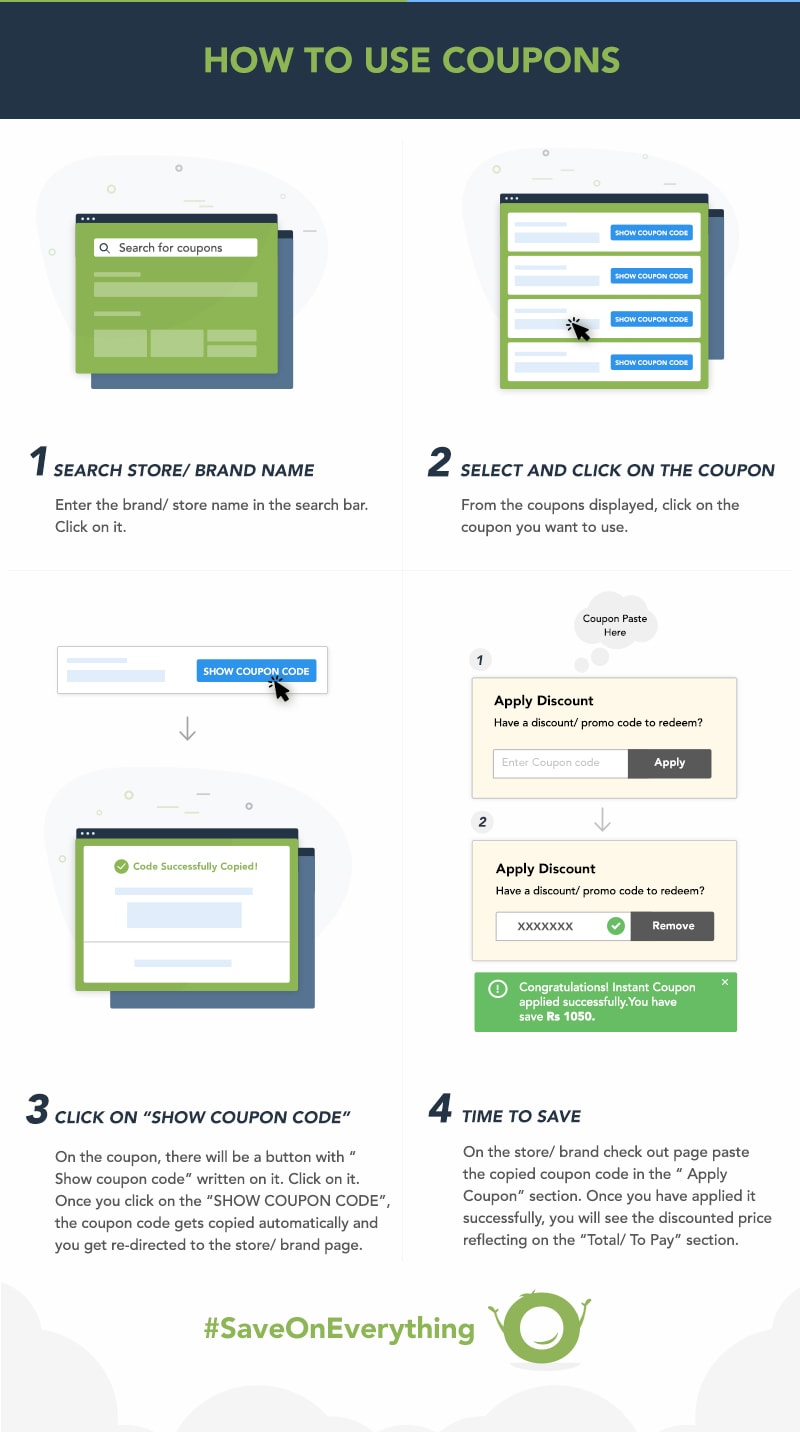
Filters
USER TYPES
Categories
-
AI Software

More About FreshBooks
Coupons Info
-
Coupons & Offers
:7
-
Verified
:7
Top Cashback Cards
AU Small Finance Bank
LIT Credit Card
Coupons You May Like

SITEWIDE OFF
Sitewide Offer : Up To 70% OFF On All Software & Antivirus Plans

TOP BUYS
Purchase Microsoft 365 Personal Plan For Just Rs 4899 Per Year
Coupons from Similar Stores
Popular Stores

Subscribe Now
Get The Latest & Best Coupon/Offer Alerts
