


OpenClaw Coupons
Best 7 Coupons & Offers last validated on October 22nd, 2026
- All (7)
- Coupons (1)
- Offers (6)
Existing User
- All (7)
- Coupons (1)
- Offers (6)
Get Flat 20% OFF On 100,000+ Users
- Avail flat 20% OFF on your plan purchase
- The discount is applicable for 100,000+ Users
- Use the code to grab the deal
OpenClaw code not working?
The alternatives below are
100%
Verified

Get Up To 73% OFF + Extra 10% OFF On OpenClaw Hosting Plan
Verified 100% SuccessAvail Flat 40% OFF On All Annual Plans
- Save 40% OFF on your plan purchases
- The discount is applicable to all Annual Plans
- The plan price begins at $23.94/ month
Annual API Bundle: Flat 40% OFF
- Save 40% OFF on your plan purchase
- The discount is applicable to the Annual API Bundle
- Grab the plan at $53.94/ month
Monthly Plan Strats From $39.9 / month
- Sign up now & get Monthly Plan at the best deal
- The plan price starts from $39.9 / month & above
Top Cashback Cards

AU Small Finance Bank
LIT Credit Card
OpenClaw Offers & Promo Codes
Monthly API Bundle: Grab The Plan At $89.9 / month
- Sign up now & get Monthly API Bundle at best deal
- The plan price begins at $89.9 / month
- Perfect for professional users who need built-in LLM API
Discover Best AI Assistant & Autonomous Agent
- Sign up now & explore the best AI Assistant & Autonomous Agent
- Manage tasks, automate workflows, and write code via WhatsApp, Telegram, or Discord.
Signup Now To Get Free Trial On Your First Use
- Get free access on your first use
- The deal applies to new users
Verified OpenClaw Coupons & Offers For Oct 2026
| Category | OpenClaw Coupon Codes & Promo Codes |
| On All Annual Plans | Avail Flat 40% OFF |
| Annual API Bundle | Flat 40% OFF |
| On 100,000+ Users | Get Flat 20% OFF |
| Monthly Plan | Starts From $39.9 / month |
| Monthly API Bundle | Plan At $89.9 / month |
About OpenClaw
OpenClaw is a free, open-source AI agent that first appeared in November 2025. It was built by Peter Steinberger, an Austrian developer better known earlier for iOS tooling, who shipped it as a side project and watched it go viral. The project has had three names in a few months. It started as Clawdbot, became Moltbot in late October 2026 after trademark complaints, and then settled on OpenClaw days later when the Moltbot name did not stick. So if you see all three names in old guides, they are the same tool.
The numbers around it are unusual for a personal project. By early 2026 the GitHub repository had crossed roughly 250,000 stars, which put it past long-standing projects like React for a stretch, with tens of thousands of forks. Steinberger announced in October 2026 that he was joining OpenAI and that a non-profit foundation would take over long-term stewardship of the project, so the code is not tied to one person's spare time any more.
Here is the part that shapes this entire page. OpenClaw is software you download and run, not a service you subscribe to. There is no paid plan, no seat licence, and no checkout for the tool itself. It is released under an open-source licence, so you are free to install it, read the code, change it, and host it yourself at no charge. That means there is no OpenClaw discount code to hunt for, because there is no price tag on the thing being discounted.
What does cost money sits around the tool. OpenClaw needs a brain, which is an external LLM you connect with your own API key, and that LLM bills you per use in US dollars. To keep the agent running day and night rather than only when your laptop is on, most people rent a small cloud server, which is another monthly charge. For an Indian user those two bills are foreign, dollar-denominated purchases, so they pick up GST as an imported service, a card forex markup, and RBI rules on recurring international payments. GrabOn lists verified offers for the cloud hosts and developer tools you would buy to run OpenClaw, since that is where a coupon can genuinely lower your bill.
What OpenClaw Does
OpenClaw is a personal AI agent that takes instructions in plain language and actually carries out tasks on your machine, rather than just chatting back. You talk to it through a messaging app you already use, it thinks using whichever LLM you connected, and it can read and write files, run commands, and reach out to you on its own when something needs attention. Knowing what it can touch matters, because that reach is also the source of both its usefulness and its risk.
You bring your own LLM
OpenClaw has no built-in model. It is a shell that plugs into an external large language model through an API key you supply, and you pick the provider. People run it on Anthropic's Claude, OpenAI's GPT models, DeepSeek, Google's Gemini, and others, and many mix models, sending cheap routine checks to a small model and saving a stronger model for harder tasks. The agent is only as capable, and only as expensive, as the model behind it, so the choice of LLM is the single biggest decision you make.
It lives inside your chat apps
Instead of a dashboard, OpenClaw talks to you where you already are. It connects to messaging platforms including WhatsApp, Telegram, Discord, Signal, Slack, iMessage, Microsoft Teams, Google Chat, and Matrix, depending on the channel plugins you enable. You message it like a contact, ask it to do something, and it replies in the same thread. It can also message you first, which is the point: a well-set-up agent can ping your Telegram when an email needs a reply or a task is done.
It has real access to your system
This is the headline capability and the headline caution. OpenClaw can read and write files on the machine it runs on, run shell commands and scripts, control a browser, and monitor things like your inbox or calendar. That is what lets it draft replies, sort files, pull together a summary, or kick off a job without you babysitting it. The same access is why the security section below is long and blunt, since an agent that can run commands and read your keys is a powerful tool and a real attack surface in equal measure.
Skills and automation
OpenClaw runs on a heartbeat, waking on a schedule to check whether anything needs doing, which is how it acts on its own rather than only when prompted. You extend it with skills, small add-ons that teach it specific jobs, and there is a community library of them. That library is a double-edged thing: it adds power fast, but reports have flagged that a meaningful share of third-party skills are low-quality or outright suspicious, so what you install matters as much as what you ask.
Is OpenClaw Free?
Yes. OpenClaw the software is free, full stop. It is open-source, so you can download it, run it, inspect the code, modify it, and self-host it without paying anyone for the program. There is no trial that converts to a subscription, no locked premium tier inside the tool, and no licence fee. That is genuinely unusual for something this capable, and it is the reason a coupon for OpenClaw itself does not exist.
But free to download is not the same as free to run, and that gap is where most people get surprised. OpenClaw is an empty engine. To make it do anything, you connect a paid LLM and, if you want it running around the clock, a paid server. Both of those are bought from foreign providers in US dollars, and both are recurring. So the honest answer is that the tool costs zero and the setup around it costs something every month.
The table below separates the parts cleanly, since the whole point of this page is to be straight about where rupees actually leave your account.
| Component | What It Is | Cost | Can an Offer Apply? |
|---|---|---|---|
| OpenClaw software | The open-source agent itself, downloaded and self-hosted | Free, no licence or subscription | No, there is no price to discount |
| LLM API key | The external model that powers the agent, paid per use to Claude, OpenAI, Gemini, DeepSeek, and others | Roughly 5 to 60 US dollars a month, depends entirely on usage | Sometimes, via the provider's own credits or trials, not via OpenClaw |
| Cloud host or VPS | A small server to run OpenClaw day and night instead of your laptop | Around 4 to 10 US dollars a month for a basic VPS | Yes, hosting providers run promos worth checking |
| Managed hosting | A one-click service that runs OpenClaw for you, sometimes with bundled model access | Around 45 US dollars a month for a typical managed plan | Possibly, depending on the provider's offers |
| Domain or extras | Optional, a domain name or paid developer tools you wire in | A few dollars a year and up, optional | Yes, registrars and tools run discounts |
Read that table once and the shape is clear. The free thing is the agent. The paid things are the model and the machine. So when you see talk of OpenClaw offers, the realistic version is a discount on the cloud host or a developer tool you buy to run it, plus whatever free credits the LLM provider hands new users directly. None of that is a code you paste into OpenClaw, because OpenClaw has no checkout. If a site claims to sell you an OpenClaw subscription or licence, treat that as a red flag, since the real project gives the software away.
API Credits and Hosting Costs
Two bills decide what OpenClaw costs you each month: the LLM API and the host. The software is free, so everything you pay is one of these two, plus the foreign-billing layer on top. Getting a feel for the ranges helps you avoid both overspending and the shock of a bigger-than-expected statement.
The LLM API bill is the variable one
This is the part that moves the most, because it is usage-based. You are charged per token, which roughly means per unit of text the model reads and writes, and the rate depends on which model you pick. A small, cheap model costs a fraction of a strong one. A light personal user who routes most work to a budget model might spend only a few dollars a month, while someone running a heavier model on frequent tasks can reach 30 to 60 US dollars or more. The agent's heartbeat matters here too, since every scheduled wake-up calls the model and gets billed, so a chatty default model on a 30-minute cadence quietly runs up the tab.
The hosting bill is the steady one
If you only run OpenClaw on your own laptop while it is on, hosting costs nothing extra. But the point of an always-on agent is that it works while you sleep, and for that you rent a small cloud server. A basic VPS from providers like Hetzner, DigitalOcean, or Contabo runs roughly 4 to 10 US dollars a month and is enough for a personal setup. If you would rather not touch a terminal, a managed OpenClaw host runs the whole thing for you, often around 45 US dollars a month, sometimes with model access bundled in. That convenience is the trade: more money, less setup.
| Cost Pattern | Typical Monthly Range | What Drives It | Notes for an Indian Buyer |
|---|---|---|---|
| Light personal use, cheap model, self-hosted | About 6 to 13 US dollars | Budget VPS plus a low-cost model on a slow heartbeat | Add GST and forex on both the host and the API |
| Typical personal use, mixed models | About 15 to 40 US dollars | VPS plus moderate Claude or GPT usage at normal load | The common middle, verify rates with each provider |
| Heavier use or small-business workflows | About 25 to 60 US dollars and up | Frequent tasks, stronger models, more API calls | Watch the API line, it scales fastest |
| Managed hosting | About 45 US dollars and up | One-click host, sometimes bundled model access | Simplest path, highest fixed cost |
| Local model instead of API | Hardware cost, near-zero per use | Running an open model on your own machine | Removes the API bill but needs capable hardware |
Two honest caveats on these numbers. First, they are approximate ranges that depend heavily on how you use the agent and which model you pick, so treat them as a starting frame and verify the live rates on the LLM provider's pricing page and the host's plan page before you commit. Token prices and VPS plans change, and a single quote from a blog can be stale within weeks. Second, the rupee total always lands above the dollar sticker once GST and the card forex markup are added, which the tax and payment sections below spell out. Model the all-in cost, not the headline dollars, especially if you are weighing OpenClaw against a flat-fee Indian tool.
Where the Offers Actually Apply
Since OpenClaw is free, the savings story is about the paid services around it, and being clear about that is the honest version of a coupon page. There is no OpenClaw promo code, because there is nothing to buy from OpenClaw. What you can save on are the cloud host, the domain, the developer tools, and to some extent the LLM credits, through the providers' own offers rather than anything tied to the agent. The table maps the realistic angles.
| Where the Saving Lives | Offer Details | Best For | How to Use |
|---|---|---|---|
| Cloud host or VPS | New-user credits or a percentage off the first months, common from DigitalOcean, AWS, and similar | Anyone self-hosting OpenClaw on a rented server | Check the live hosting offer on GrabOn, then apply it at signup |
| Domain registrar | First-year discounts on a domain if you point one at your agent | Users who want a clean address for remote access | Use a registrar coupon at the registrar's checkout |
| Developer tools | Discounts on paid tools you wire into OpenClaw, such as a code host or a notes app | Builders extending the agent with other paid services | Apply the tool's own offer where listed |
| LLM provider credits | Free starter credits or promotions from the model provider, given directly by them | New API users testing OpenClaw before paying at scale | Claim the provider's own new-account credit, not an OpenClaw code |
| Managed OpenClaw host | Intro pricing some managed hosts run on the first term | Users who want one-click setup without a terminal | Check the managed host's offer before signing up |
| Local model route | No coupon, but running an open model locally removes the API bill entirely | Users with capable hardware who want zero per-use cost | Use a local model instead of a paid API key |
The honest read across the usual offer angles. The best coupon-style saving is on the cloud host, since hosting providers genuinely run new-user credits and first-month discounts, and that is the one place a GrabOn code lowers a real OpenClaw-related bill. The best no-cost move is to run OpenClaw on your own laptop while you trial it, or to run a local model, both of which cost nothing per use. There is no India bank-card aisle here, because the host and API are foreign dollar checkouts, though your own card's international offers may apply at those providers. There is no app-store coupon, since OpenClaw is self-hosted code rather than an app you buy. The best new-user value is the free starter credits the LLM provider hands out directly. And the best timing is the same as any cloud spend, around the providers' periodic sales. GrabOn keeps verified offers for hosts and tools current, so check the live listing for the service you actually need rather than expecting a code for the agent itself.
How to Install and Self-Host OpenClaw
Setting up OpenClaw is more about wiring than spending, since the install is free and the only paid steps are the API key and the optional server. The order matters, because the agent does nothing until it has a model to think with, and you want security settings in place before you give it real access. Here is a practical sequence.
- Check the requirements first. OpenClaw runs on Node.js, with a recent LTS version recommended, so install or update Node before anything else to avoid version errors.
- Get an LLM API key from your chosen provider, such as Anthropic, OpenAI, or Google, and claim any free starter credits they offer new accounts so your early testing costs little or nothing.
- Install OpenClaw from the command line. The common route is a global npm install of the latest package, which pulls the agent onto your machine in a few minutes.
- Add your API key to the configuration, and treat that key like a password from the start, since it is the single most valuable secret in the setup.
- Connect a messaging channel you control, for example a private Telegram or Discord, by enabling that channel plugin and following its pairing step, so you can talk to the agent.
- Run it locally first on your own laptop and give it small, low-risk tasks to confirm it behaves before you grant it access to anything sensitive.
- Lock down access before going further. Limit what the agent can read and run, avoid root permissions, and keep it off the open internet unless you have put it behind proper protection.
- If you want it always-on, rent a small VPS, apply any hosting offer at the provider's signup, and move the setup there so it runs day and night without your laptop.
- Set the heartbeat sensibly. Point routine wake-ups at a cheap model and use a slower cadence, since every scheduled check calls the API and adds to your bill.
- Keep an eye on the LLM provider's usage dashboard for the first weeks, save the invoices, and adjust the model or cadence once you see what your real spend looks like.
Two habits save money and grief on this kind of setup. First, do all your early experimenting on free provider credits and a local run before you point the agent at a paid model on a server, because that is when the meter starts and a misconfigured heartbeat can burn credits fast. Second, decide on access limits before you connect OpenClaw to your files and messages, not after, since walking back permissions is harder than granting them carefully in the first place. If you would rather skip the terminal entirely, a managed host handles the install for you, but you pay for that convenience and you still bring or fund the model.
Why Your Bill Runs Higher Than Expected
Most OpenClaw bill surprises are not the tool, since the tool is free, they are the API meter, the host, or the foreign-card layer. Because the model bills per use and everything is in dollars, a charge can land above what you guessed for plain reasons. Run through these before you assume something is broken.
- The heartbeat is calling an expensive model. Every scheduled wake-up bills the model, so a strong default model on a 30-minute cadence quietly runs up the API line even when you are not using it.
- You picked a premium model for everything. Routing simple checks to a top-tier model instead of a cheap one can multiply the API bill several times over for the same work.
- A task ran in a loop. Autonomous agents can spiral on a poorly framed goal, retrying and re-reasoning, which burns tokens fast and shows up as a spike.
- You moved from laptop to a server. The VPS is a new monthly charge that did not exist when you ran OpenClaw locally, so the host bill is a genuine addition, not an error.
- You chose managed hosting. A one-click managed plan around 45 US dollars a month is far more than a basic VPS, so the convenience itself is the cost.
- Forex markup on the card. Your bank adds a foreign-transaction fee, usually a few percent plus GST on that fee, so the rupee total runs above the dollar sticker on both the API and the host.
- GST on imported services. Both the LLM API and the cloud host are OIDAR supplies carrying 18 percent IGST, which a business self-accounts and an individual pays in the price.
- Currency moves between charges. The dollar bills convert at the rate on each charge date, so two identical-dollar months can read as different rupee amounts.
- Free credits ran out. The provider's starter credits cover early testing, then the first real bill arrives and looks like a jump because the trial cushion is gone.
- A card block or missed OTP. An international-payment block or a missed authentication can stop a charge, which can look like a billing fault when it is a payment one.
If the cost itself feels wrong, the fix is almost always on the model side, not the agent side. Pin the heartbeat to a cheap model, slow the cadence, route only hard tasks to a strong model, and watch the provider's usage dashboard so a runaway loop shows up early rather than at month-end. On the host side, a basic VPS is usually plenty for a personal agent, so you rarely need a big managed plan. And keep every invoice from both the API provider and the host, since clean records make the GST self-accounting painless and save you reconstructing a year of dollar charges at filing time.
More Ways to Cut the Cost
Beyond a hosting coupon, the bigger OpenClaw savings come from how you run the model, since the API is the part that scales with use. The tool is free, so the game is keeping the two paid bills small. The moves below tend to save more than chasing a code.
- Trial on free provider credits first. Most LLM providers hand new accounts starter credits, so you can test OpenClaw thoroughly before you spend real money, and only commit once you know it earns its keep.
- Route tasks by difficulty. Send routine checks and the heartbeat to a cheap, fast model, and reserve a strong model for the few tasks that genuinely need it. This single habit can cut the API bill dramatically.
- Slow the heartbeat. Dropping the wake-up cadence from every 30 minutes to every few hours, where your use allows, means far fewer billed model calls across a day.
- Run it locally while you can. If you do not need a 24/7 agent, running OpenClaw on your own laptop while it is on avoids the VPS bill entirely. The server is only worth it for always-on use.
- Pick a basic VPS, not a big one. A small server from a value provider is enough for a personal agent, so you rarely need to pay for a large instance or a managed plan.
- Consider a local model for heavy routine work. If you have capable hardware, running an open model on your own machine removes the per-use API bill, trading hardware for tokens.
- Use a hosting offer at signup. Where you do rent a server, apply a verified host coupon from GrabOn at the provider's checkout, since new-user credits on cloud hosts are real and worth claiming.
- Set a spend cap on the API. Many providers let you set a monthly limit or alert, which stops a runaway task from quietly draining your account before you notice.
- Account for the forex markup. Since both bills are in dollars, your card adds a few percent on top, so factor that in when comparing OpenClaw's all-in cost against a rupee-billed alternative.
The short version: free credits and a cheap model on a slow heartbeat do most of the cost control, a basic self-hosted VPS keeps the rest small, and a host coupon on top is a bonus rather than the main event. For an Indian user weighing OpenClaw against a paid managed assistant, model the real monthly API spend and the forex first, since the headline of free software hides a usage bill that is entirely in your hands to shape.
GST, OIDAR, and Tax on API and Hosting
18 percent. That is the GST attached to the LLM API credits and the cloud hosting you buy from abroad to run OpenClaw, because both are imported digital services. The OpenClaw software is free and carries no tax, but the paid services around it do. In GST language these are OIDAR services, Online Information and Database Access or Retrieval, and they carry an IGST rate of 18 percent like most imported services. How that 18 percent reaches you depends on whether you buy as a GST-registered business or as an individual, so the two cases work differently.
If you buy as a registered business
When the buyer is a GST-registered Indian business using OpenClaw for work, importing the API credits and the hosting falls under the reverse-charge mechanism, the RCM. In plain terms, the foreign provider does not charge you Indian GST. Instead, you self-account for the 18 percent IGST in your own GST returns, reporting it under RCM and paying it to the government. The upside is that this IGST is generally available as input tax credit, the ITC, where the service is used for business and your filings and documentation are in order. So for a developer or small firm running an agent for legitimate work, the GST on the API and the host is largely a wash through the credit, provided the paperwork is clean and you hold a valid GSTIN.
If you buy as an individual
When the buyer is an unregistered individual, a B2C OIDAR supply, the model flips. The foreign provider is the one required to register for Indian GST and charge the 18 percent on the sale, since the consumer cannot self-account. Whether that tax appears as a separate line or is folded into the price depends on how each provider handles Indian billing, so check the invoice from your LLM provider and your host separately. Either way, an individual cannot claim input tax credit, so for a personal account the GST is simply part of the cost.
What to do
Keep every invoice from both the API provider and the cloud host. A business buyer needs them for the RCM self-accounting and the ITC claim, and an individual needs them as a record of what was charged. Report the IGST under RCM in your GST returns if you are registered, and keep the supporting documents tidy. Because you may be buying from two or more foreign vendors to run one agent, the paperwork stacks up, so a simple folder per provider helps. The exact treatment and whether a given expense qualifies for credit can turn on how your work is set up, so this is the one area where a quick check with your CA or tax advisor is worth more than any coupon page. Rates and rules can change, so verify the current position before filing.
Payment, Cards, and Forex
Running OpenClaw from India means paying foreign providers in US dollars, usually two of them, and that adds layers a rupee-billed tool never carries. The agent is free, but the API and the host are dollar checkouts, so the same card and bank rules apply to both. Here is what to expect when those bills land.
You pay with an international-enabled credit or debit card. The first thing to check is whether your card even allows international online transactions, since many Indian cards have that switched off by default and you toggle it in the bank app. A blocked card is the single most common reason a foreign signup fails, and it can look like a provider problem when it is really a card setting. You may need to enable it once for the LLM provider and again for the host.
On top of the listed dollar price, your bank adds a foreign-transaction or forex markup, usually a few percent, plus GST on that markup. So an API top-up or a VPS plan that reads as a certain dollar figure costs a little more in rupees once the card is done. That spread is small on one small charge but worth counting across two recurring bills, since a rupee-billed alternative avoids the forex layer entirely.
Because both the API top-ups and the hosting plan can renew or auto-charge, these are recurring international mandates, which brings RBI rules into play. Recurring card payments in India run on the e-mandate framework, and transactions above the RBI threshold need additional-factor authentication, usually an OTP, at the time of charge. Card-on-file details are tokenised under RBI rules rather than stored raw. The practical effect: you may get an OTP prompt at signup and again at renewal or top-up, and if you miss it, the payment can fail and your agent can stall when its credits run dry. Keep the phone linked to your card handy when a charge is due, and consider prepaid API credits over auto-recharge if you prefer to control the timing yourself.
One more point on the bigger picture. Paying a foreign provider in dollars for software services is a normal current-account transaction under FEMA, so there is nothing exotic about it for a personal or small-business buyer. The thing to actually manage is the recurring, two-vendor nature: an API auto-recharge and a host renewal can both fire on their own, each with the forex markup added. Confirm the dollar amounts, account for the markup, and make sure your card and OTP are ready before you commit and again before any renewal or top-up.
Security, Data, and DPDP
This is the section to read slowly, because OpenClaw's power and its risk are the same feature. You are running an autonomous agent that can read your files, run commands, see your messages, and act on its own, all driven by an LLM it talks to over the internet. That is genuinely useful and genuinely dangerous, and treating the security setup as optional is the most expensive mistake you can make with a free tool.
What leaves your machine
OpenClaw runs locally, but it is not a closed box. To think, it sends the relevant context to the external LLM you connected, so whatever the agent reads to do a task, a file, an email, a message thread, can be passed to your model provider over their API as part of the request. That is normal for any tool that uses a cloud model, but it means sensitive content can travel off your machine to a foreign provider. Read your LLM provider's data and retention terms, since how they handle and store API inputs is their policy, not OpenClaw's, and decide what you are comfortable feeding the agent on that basis.
The autonomous-agent risk
Security researchers have flagged several real risks specific to this kind of tool, and they are worth naming plainly:
- Prompt injection. Because the agent reads untrusted text, an email, a web page, a chat message, a hidden instruction inside that content can hijack the agent into doing something you never asked, such as leaking data or deleting files.
- Plaintext secrets. If API keys and credentials sit in plain config files, anyone who gets file access can steal them, so the key that powers your agent is also the key worth stealing.
- Over-broad access. An agent running with full permissions, able to run any command, is far more dangerous if compromised than one with a narrow allowlist and limited reach.
- Exposed instances. OpenClaw setups left open to the internet without protection have been found and probed, so an always-on server is a target if it is not locked down.
- Untrusted skills. Reports have flagged that a notable share of third-party skills are low-quality or malicious, including typosquats and social-engineering tricks, so installing a random skill is installing code you did not write.
How to run it more safely
The defensive setup is not exotic, it is discipline. Run the agent as a restricted user, not root. Keep it sandboxed or in a container so a bad command cannot reach your whole system. Give it the narrowest access that still does the job, and use command allowlists or approval steps for anything destructive. Keep API keys out of plaintext where you can, rotate them if you suspect exposure, and never expose the instance directly to the open internet, put it behind a VPN or proper authentication. Be cautious about which messages and channels the agent will act on, since a public group is an open door. And only install skills you trust, from sources you can verify.
The DPDP angle
If your agent handles other people's personal data, India's Digital Personal Data Protection Act, the DPDP Act of 2023, is in play, and the responsibility is yours, not the tool's. The moment OpenClaw reads, stores, or processes identifiable personal information, of customers, colleagues, or anyone else, you are the one handling that data and you carry the obligations: a lawful basis, usually consent, careful handling, and extra care with anything involving children. For a purely personal agent working on your own files this rarely comes up. But the moment a real person's data enters the pipeline, especially in any work context, consent and disclosure become your job, and feeding such data to a foreign LLM provider raises further questions you should think through before you do it.
OpenClaw vs AutoGPT and OpenHands
OpenClaw is one of several autonomous AI agents an Indian developer might weigh, and the right pick turns on what you want the agent to do and how much control you need. OpenClaw is built around personal automation through your chat apps. AutoGPT is the early experiment in goal-driven loops. OpenHands and Cline are aimed at software work. Manus is a closed, hosted assistant. The table sets the main options side by side, with all of them sharing the same underlying cost shape: the tool may be free, but the model behind it is not.
| Tool | What It Is | Cost Shape | Best For |
|---|---|---|---|
| OpenClaw | Open-source personal agent controlled through WhatsApp, Telegram, and other chat apps, with file and system access | Free software, you pay for the LLM API and a host | Always-on personal automation you message like a contact |
| AutoGPT | Open-source, MIT-licensed framework that breaks a goal into subtasks and runs them in a loop | Free software, you pay for the LLM API | Experimenting with autonomous agent patterns and learning |
| OpenHands | Open-source, MIT-licensed coding agent that plans and applies changes across a codebase | Free self-host, paid hosted cloud option, plus the model | End-to-end software tasks and engineering work |
| Cline | Open-source coding agent that lives inside your editor with permissioned execution | Free extension, you pay for the LLM API | IDE-native coding with model choice and approval controls |
| Manus | Closed, cloud-native general-purpose assistant run through its own web interface | Paid subscription, model included in the service | Polished one-session task completion without self-hosting |
A practical way to read that. If you want an agent that lives in your messaging apps, runs day and night, and handles personal tasks across your files and inbox, OpenClaw is the most fitting of the group, and the free software plus a cheap model makes it inexpensive to live with once you control the API spend. If you mainly want to learn how autonomous loops work or tinker with agent design, AutoGPT is the classic starting point, though it is known for unpredictable token use and runaway loops, so watch the bill. For actual software development, OpenHands and Cline are purpose-built and beat a general agent: OpenHands for shipping changes across a codebase, Cline for editor-native work with approval controls.
Manus sits apart because it is a closed, hosted service. You pay a subscription and the provider runs everything, so there is no self-hosting and no API key to manage, which suits someone who wants results without setup. The trade is control and data: with OpenClaw you own where it runs and what it touches, with Manus you hand that to the provider. For an Indian buyer the cost comparison is also a billing comparison, since OpenClaw's API and host are foreign dollar charges with GST and forex, while a managed service is a single foreign subscription with the same tax shape. Pick OpenClaw for control and chat-app automation, the coding agents for code, and a managed assistant when you would rather not run anything yourself.
Who OpenClaw Suits
OpenClaw is not for everyone, and being honest about the fit saves wasted effort and risky setups. It is free, capable, and demanding in equal measure, so the right user is someone who values control and is willing to handle the setup and the security. Here are the profiles where it makes sense and where it does not.
The developer who wants a personal automation agent
This is the core user. Someone comfortable with a terminal, an API key, and basic server hygiene, who wants an agent they can message on Telegram to sort files, draft replies, run jobs, and ping them when something needs attention. For this person OpenClaw's free software and full system access are the whole appeal, the API and a cheap VPS keep it affordable, and the security setup is a known cost of doing business. If you like owning your tools, this fits.
The tinkerer and learner
If you want to understand how autonomous agents actually work, OpenClaw is a hands-on way in, since you can read the code, change it, and watch the agent reason and act. The free starter credits from LLM providers mean you can experiment for little, and running it locally first keeps both the cost and the risk low. The catch is that learning by doing on a tool with system access means learning the security side too, not just the fun parts.
The small team wanting always-on workflows
A small business or team can run OpenClaw on a server to handle recurring workflows across chat apps, and the open-source base means no per-seat licence. But this is where the security and DPDP sections matter most, since a team agent touches more data and more people. Worth it for the control and cost, only if someone owns the locked-down setup and the compliance side properly.
Who should look elsewhere
If you want results without running anything, a managed assistant like Manus suits you better, even at a subscription cost. If your need is purely software development, OpenHands or Cline are the stronger, more focused tools. And if you are not comfortable managing API keys, server access, and the real security risks of an autonomous agent, OpenClaw is the wrong tool, since the freedom comes bundled with responsibility you cannot hand off. The honest filter: pick OpenClaw if you want control and will do the work to run it safely, and look past it if you want convenience handed to you.
Is OpenClaw Worth Running?
Best for: developers and technical tinkerers who want a free, open-source personal agent they control, message through WhatsApp or Telegram, and run on their own machine or a cheap server. The software costs nothing, the code is open, and the only real bills are the LLM API and a small host, so for someone willing to do the setup and handle security, it is a powerful tool at a usage cost they shape themselves. If owning where your agent runs and what it touches matters to you, OpenClaw fits.
Be careful if: you are not ready to manage the security of an autonomous agent with access to your files, messages, and an LLM API key. The risks are real, prompt injection, plaintext key theft, runaway token spend, exposed instances, and untrusted skills, and they are your responsibility, not the tool's. Be careful too if you handle other people's personal data, since the DPDP Act puts the obligation on you, and if you want a fixed, predictable bill, since the API meter and the dollar forex make the cost variable rather than flat.
Best saving move: trial OpenClaw on free LLM provider credits and a local run first, then route routine tasks and the heartbeat to a cheap model while reserving a strong model for the few jobs that need it, since that single habit controls the only bill that scales. When you go always-on, pick a basic VPS and apply a verified hosting offer from GrabOn at the provider's signup rather than expecting an OpenClaw code, set a spend cap on the API, and confirm the all-in rupee cost, GST and forex included, before you commit.
Frequently Asked Questions
Is OpenClaw really free?
Yes. OpenClaw the software is genuinely free and open-source, so you can download, run, modify, and self-host it without any licence fee or subscription. There is no paid plan or promo code for the tool itself, which is why no real OpenClaw discount exists. What costs money is the setup around it: the LLM API key that powers the agent and an optional cloud server to keep it running, both bought from foreign providers in dollars.
Why is there no OpenClaw coupon code?
Because there is nothing to buy from OpenClaw. The agent is free open-source software with no checkout, no licence, and no subscription, so there is no price for a coupon to reduce. Any savings apply to the paid services around it, mainly the cloud host and the LLM credits, through those providers' own offers. If a site claims to sell you an OpenClaw subscription or licence, treat it as a warning sign rather than a genuine deal.
How much does it actually cost to run OpenClaw in India?
The software is free, so you pay only for the model and the host. A light personal setup with a cheap model and a basic VPS runs roughly 6 to 13 US dollars a month, while typical use lands around 15 to 40, and heavier use can reach 60 or more. On top of the dollar figure, an Indian buyer adds 18 percent GST as an imported service and a card forex markup, so the rupee total runs above the sticker. Verify live rates with each provider.
Is OpenClaw safe to use, and what are the risks?
It can be run safely, but only with care, because it is an autonomous agent with access to your files, messages, and an LLM API key. The real risks include prompt injection from untrusted content, theft of plaintext API keys, runaway token spend, instances left exposed to the internet, and malicious third-party skills. Run it as a restricted user, sandbox it, limit its access, keep keys out of plaintext, avoid public exposure, and only install skills you trust.
Which LLM should I connect to OpenClaw?
OpenClaw has no built-in model, so you bring your own API key and choose the provider. Common choices are Anthropic's Claude, OpenAI's GPT models, Google's Gemini, and DeepSeek, and many users mix them. A practical setup routes routine tasks and the heartbeat to a cheap, fast model and reserves a stronger model for harder jobs, which keeps the API bill, the only cost that scales with use, under control. Compare current token prices on each provider's page before deciding.
Do I need a cloud server to run OpenClaw?
Only if you want it running around the clock. You can run OpenClaw on your own laptop for free while it is on, which is the cheapest way to trial it. To have the agent work day and night without your machine, you rent a small VPS, roughly 4 to 10 US dollars a month from a value provider, or use a managed host around 45 a month for one-click setup. Apply a verified hosting offer from GrabOn at the provider's signup.
How is GST charged on the API credits and hosting for OpenClaw?
Both the LLM API and the cloud host are imported digital services, OIDAR supplies, so they carry 18 percent IGST. A GST-registered business self-accounts for it under the reverse-charge mechanism and can usually claim it back as input tax credit where the service is for business. An unregistered individual cannot self-account, so the foreign provider charges the GST and the individual cannot claim credit. Keep every invoice from each provider and check the exact treatment with your CA, since rules can change.
Can I use OpenClaw without coding knowledge?
Mostly no, at least for a self-hosted setup. The standard route needs you to install it from the command line, manage an API key, connect a messaging channel, and handle security settings, which assumes some technical comfort. If you want OpenClaw without a terminal, a managed host will install and run it for you, often around 45 US dollars a month, sometimes with model access bundled in. You still fund the model, and you trade control and data ownership for that convenience.
Looking for OpenClaw Alternatives?
OpenClaw is a self-hosted personal AI agent that runs on your own machine and connects to messaging apps to carry out tasks, which takes real setup to get running. If you'd rather define automations visually than manage a self-hosted agent, n8n coupons get you a workflow automation platform that connects your apps through visual, rule-based flows. Want an AI agent you can use instantly through a browser instead of hosting one yourself? Genspark coupons cover a hosted AI agent that can research, browse, and generate content on demand.
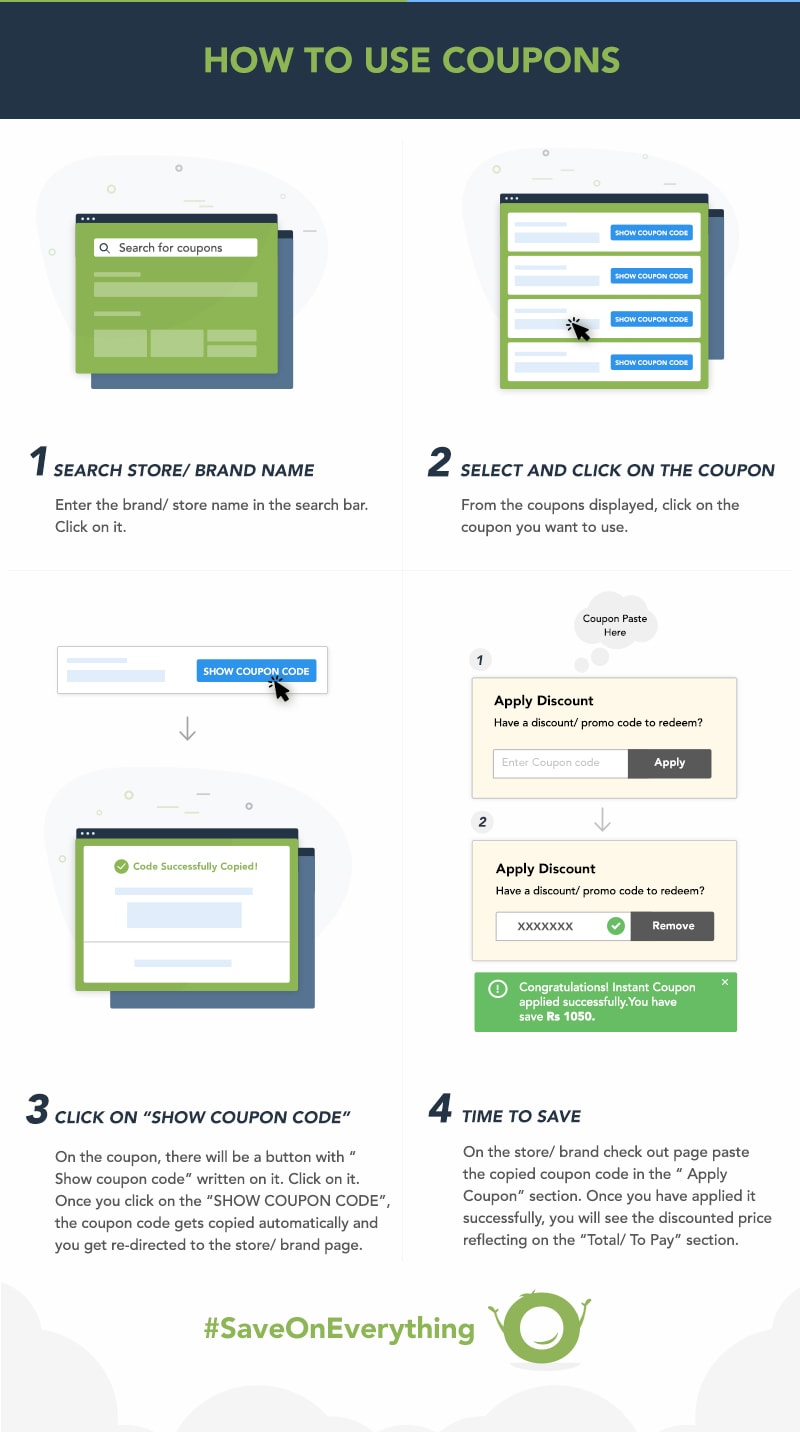
How To Use OpenClaw Coupons On GrabOn?
Filters
USER TYPES
Categories

More About OpenClaw
Coupons Info
-
Coupons & Offers
:7
-
Verified
:7
Top Cashback Cards
AU Small Finance Bank
LIT Credit Card
Coupons You May Like
FLAT 20% OFF
Flat 20% OFF On Yearly Subscription Plan

FLAT 20% OFF
Save 20% OFF On Annual Subscription Plan
Coupons from Similar Stores
Popular Stores

Subscribe Now
Get The Latest & Best Coupon/Offer Alerts
